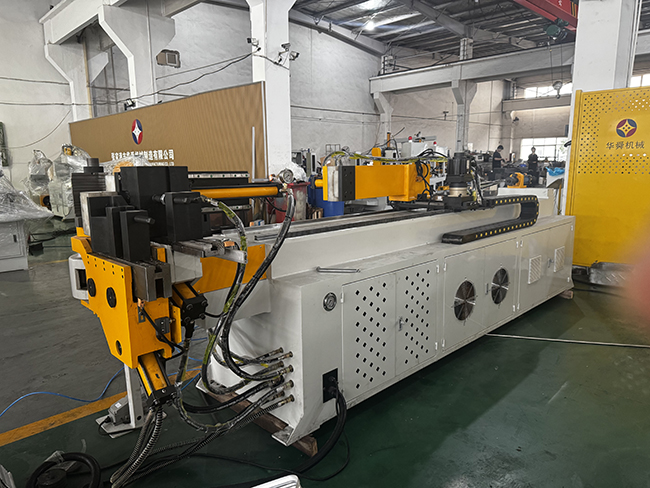
39CNC6A4S Six-Axis Four-Stack CNC Tube Bending Machine: 3D Structure Analysis and Automated Forming Advantages
author: Huashun Machinery
2026-10-14

As industries such as automotive parts manufacturing, sanitary hardware, air conditioning systems, and fitness equipment continue to demand higher tube processing accuracy and production efficiency, traditional tube bending machines face challenges when handling complex 3D tubes and products with multiple specifications. Frequent tooling changes and complicated production procedures can affect overall productivity. To meet the growing demand for flexible manufacturing, Huashun Machinery offers the 39CNC6A4S six-axis, four-stack automatic CNC tube bending machine, along with a complete SolidWorks 3D model. These resources help customers and engineering professionals understand the machine structure, evaluate its configuration, and plan production solutions.
1. Model Overview and Structural Features of the 39CNC6A4S CNC Tube Bending Machine
The 39CNC6A4S is an automatic CNC tube bending machine designed for complex tube forming applications. In the model designation, “39” indicates a maximum tube diameter of Φ39 mm, “CNC” refers to computer numerical control, “6A” represents a six-axis servo configuration, and “4S” indicates a four-stack tooling structure.
The machine can be equipped with four sets of tooling for different tube specifications or bending radii. With a suitable program and compatible tooling configuration, it can process different types of tubes in succession, reducing downtime caused by manual tooling changes.
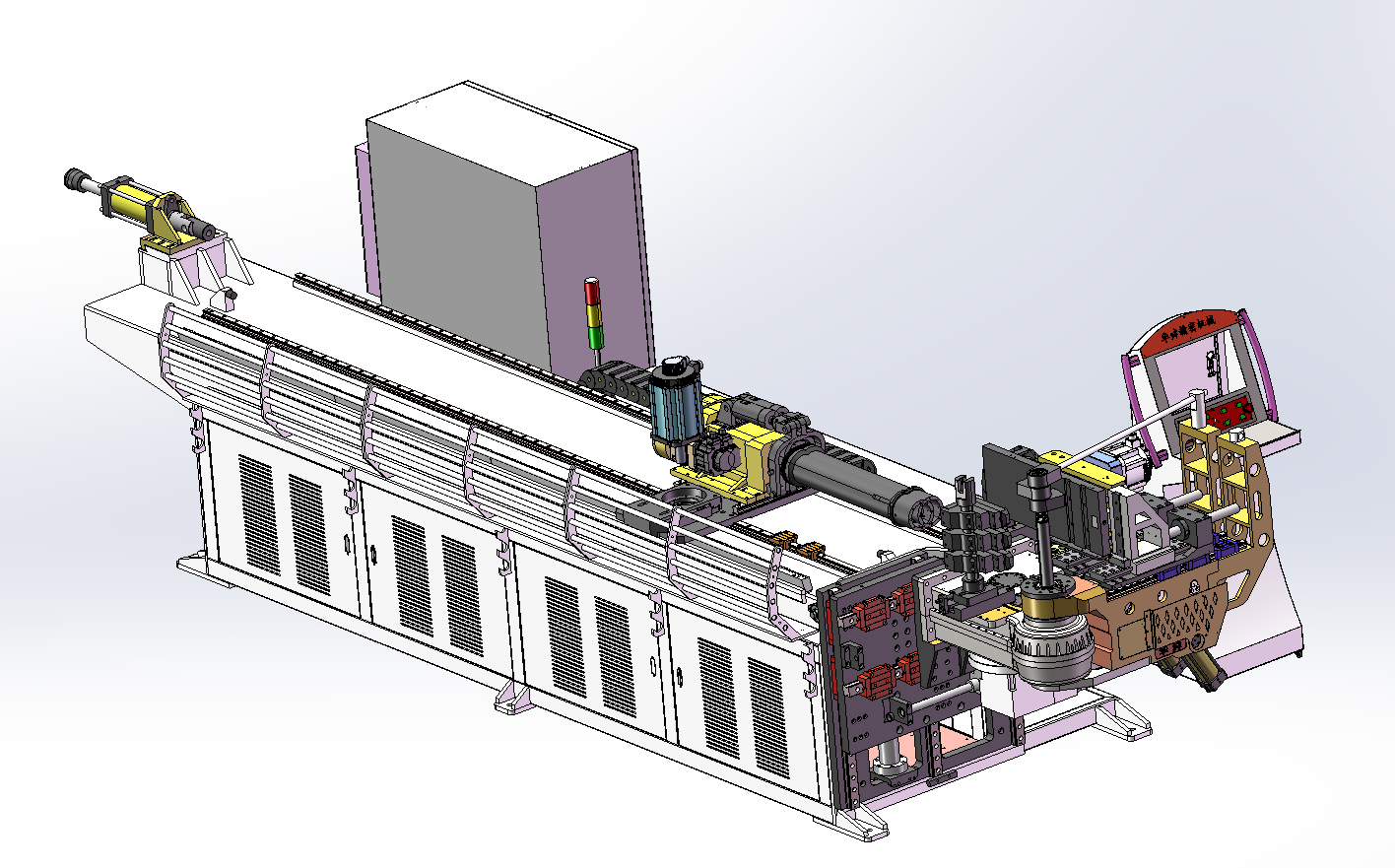
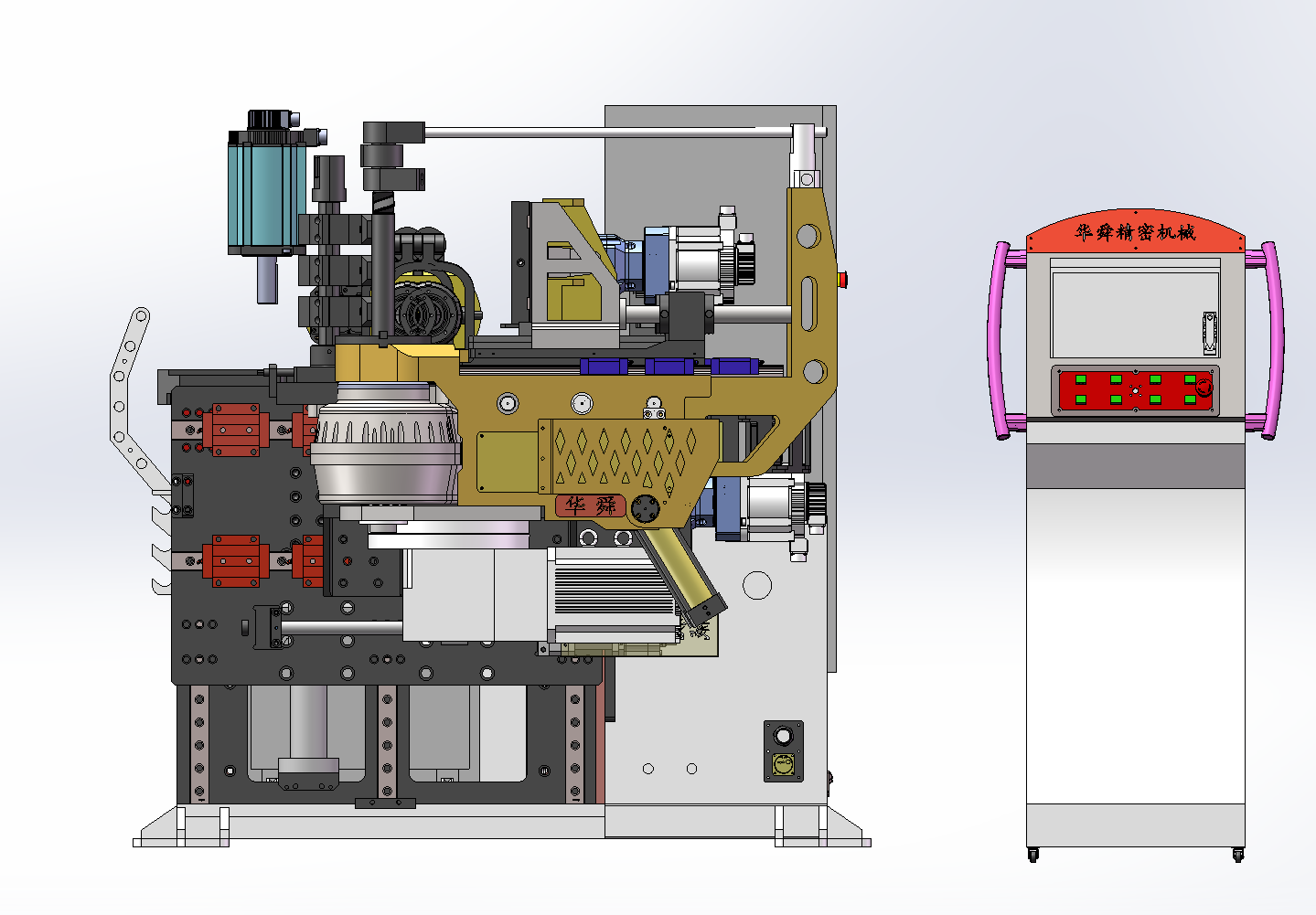
The SolidWorks 3D model provides multiple views of the machine, including close-ups of the bending head, side views of the complete machine, and different assembly perspectives. These views offer a clear reference for purchasing professionals evaluating the machine's appearance and configuration, as well as engineers studying its mechanical layout.
2. Six-Axis Servo Control and Four-Stack Tooling Design
The performance of a tube bending machine depends not only on its bending mechanism but also on the coordination of feeding, tube rotation, and other operating movements. The 39CNC6A4S features a six-axis servo configuration that coordinates bending, feeding, rotation, and auxiliary movements according to the machine's specific configuration. This enables it to handle multiple bending operations and complex three-dimensional tube geometries.
The four-stack tooling structure is one of the machine's key features. For production involving different bending radii or multiple tube specifications, installing several sets of tooling in advance reduces the need for frequent disassembly, reinstallation, and adjustment, making production changeovers more convenient.
During actual production, the bending program must be developed according to the tube's outside diameter, wall thickness, material, bending radius, and tooling configuration. Proper setup helps maintain forming quality and ensures that the selected tooling matches the processing requirements.
3. Machine Structure and Operating Configuration
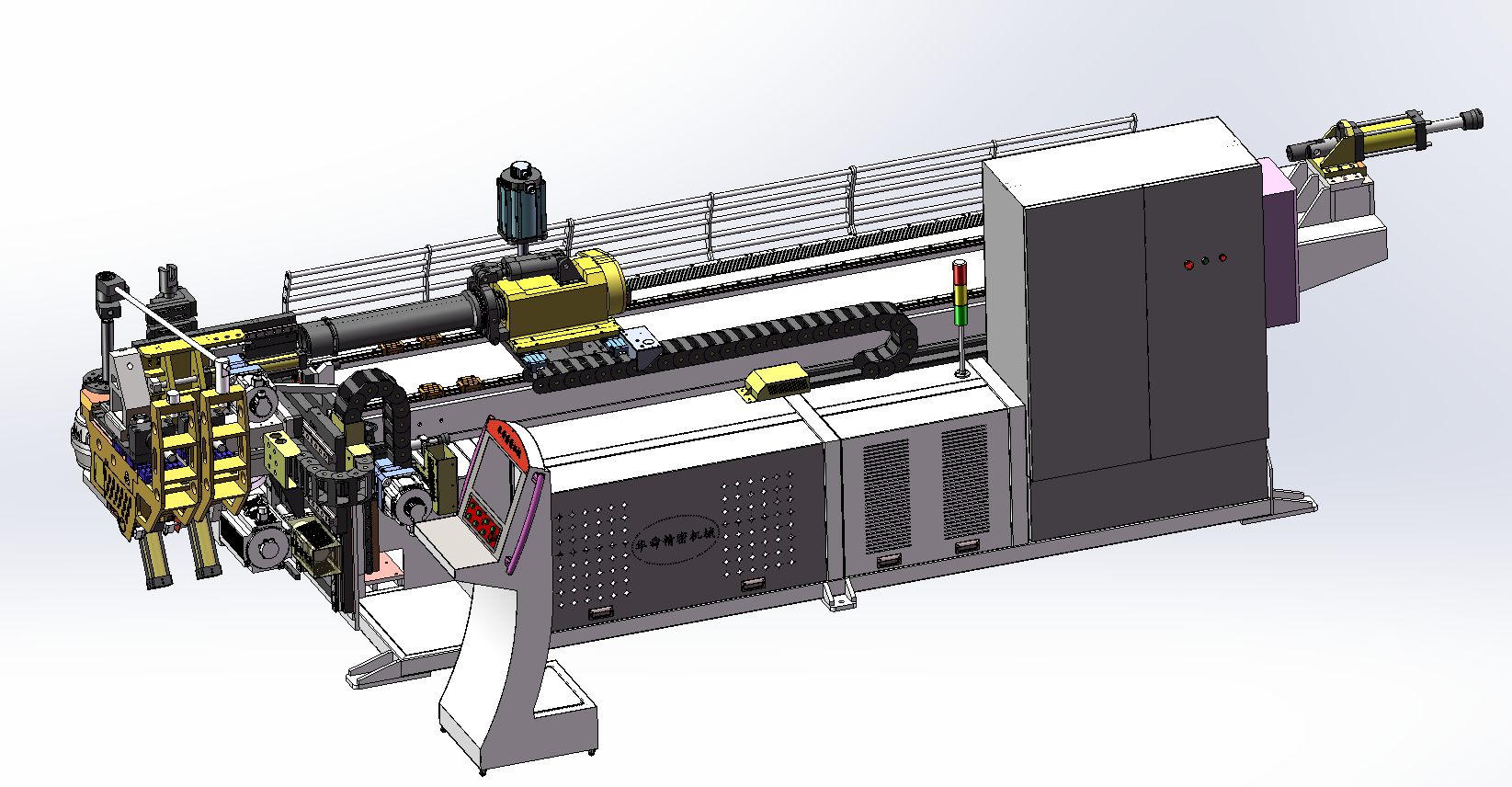
The 3D model shows that the machine adopts an elongated bed structure, providing a stable mounting foundation for the bending head and related motion components. The bending head integrates the bending mechanism, clamping components, tooling positions, and associated transmission parts. This layout balances functional requirements with space utilization and maintenance considerations.
Depending on the machine configuration, additional features may include cable carriers, safety fencing, a movable control console, and a three-color signal tower. These components support daily operation and workshop safety management.
Operators can enter tube processing programs through the CNC control system. Where supported by the system, trajectory simulation and program checks can help identify potential interference before actual bending begins, reducing trial-bending adjustments.
For equipment purchasing and factory planning, the 3D drawings also help users understand the machine's overall dimensions, installation space, and operating area. This information provides a useful reference for workshop layout, equipment installation, and future production line planning.
4. Applicable Materials and Typical Industries
Depending on the machine's capabilities, tooling configuration, and processing requirements, the 39CNC6A4S six-axis, four-stack CNC tube bending machine can be used to bend stainless steel, carbon steel, copper, and aluminum tubes. Typical applications include automotive tubing, motorcycle frames, air conditioning lines, fitness equipment, and sanitary hardware.
For tubes involving multiple bend angles, different bending radii, and complex spatial configurations, the combination of six-axis servo control and four-stack tooling can help reduce repeated loading operations and tooling changeover time, improving production continuity.
When combined with appropriate processing parameters, tooling design, and springback compensation settings, the machine can also help improve dimensional consistency in batch production. Actual bending accuracy and production cycle times should be evaluated according to tube specifications, bending radii, material properties, and processing conditions.
5. How 3D Drawings Support Machine Selection and Production Planning
The SolidWorks 3D model of the 39CNC6A4S is more than a visual representation of the machine. It can also support technical communication during the early stages of a project.
Purchasing teams can use the model to understand the machine's structure and spatial layout, while mechanical engineers can reference it for assembly checks, mechanism analysis, and fixture design. Identifying potential structural issues early can reduce subsequent design changes and improve project planning efficiency.
Huashun Machinery specializes in the development and manufacturing of tube processing equipment. By combining multi-axis servo control with a multi-stack tooling configuration, the 39CNC6A4S six-axis, four-stack CNC tube bending machine provides an option for manufacturers handling complex tube geometries, varied product specifications, and automated production requirements.
For tube manufacturers looking to reduce tooling changeover downtime and improve production efficiency, this machine and its 3D model offer valuable support for equipment selection, process evaluation, and production planning.
Machine‑related video link: https://youtu.be/ZAOiVtp4zIQ
What Are the Advantages of the 50CNC2A1S Pipe Bending Machine for Luggage Frames?
Related Article