
Pipe Bending with Ultra-Small Radii

In the new energy industry, ultra-small radius bends (e.g., R≤1x pipe diameter) are increasingly in demand (e.g., compact layout of battery cooling pipes, space-constrained piping for hydrogen fuel tanks), but pose a challenge to conventional bending technology (prone to wrinkles, cross-sectional distortion, uneven wall thickness, etc.). The following are the core solutions and cutting-edge technologies for ultra-small radius bending:
- Key Challenges
Material Deformation Limit: The smaller the bending radius, the more intense the outer tensile/inner compressive stresses, which can easily lead to rupture or wrinkling.
Springback control: Smaller radius bends have higher springback angles (e.g., titanium tubing can springback up to 15°), requiring precise compensation.
Cross-sectional maintenance: to avoid excessive ellipticity (the new energy industry usually requires ≤ 5%).
- Mainstream solutions
1. Planetary rotary stretching and bending technology
Principle: Simultaneous stretching of tubes by means of chuck rotation (revolution) + planetary movement of the bending die (rotation), reducing the build-up of material on the outside.
Advantages:
● Extreme bending with R=0.8D (or even 0.5D) can be realized (e.g., Zero-Clamp series by AMOB Japan).
●Ovalization is controlled within 3%, and wall thickness reduction is <10%.
Applications: 316L stainless steel manifolds for hydrogen fuel cells, aluminum cooling tubes in battery packs.
2. Mandrel + Multi-Mode Linkage Support
Technology combination:
● Elastic mandrel (e.g. polyurethane filled): support the inner wall of the tube to prevent collapse.
●Dynamic anti-wrinkle mold: automatically adjust the pressure with the bending process to inhibit the inner side of the wrinkle.
Example: BLM GROUP's ETURN series, which achieves R=10mm (approx. 0.83D) bending for Φ12mm aluminum tubing.
3. Thermally assisted bending
Local induction heating: Precise heating of the outside of the bend to the plastic temperature of the material (e.g. 200-300°C for aluminum alloys) to reduce the deformation resistance.
Cold bending + laser annealing: laser treatment after bending to eliminate residual stress and reduce springback (for copper tube).
4. Incremental Bending Process (Incremental Bending)
Step-by-Step Progressive Molding: Accumulate into a large angle by bending multiple times at a small angle with high frequency (e.g. 5° each time) to reduce the amount of deformation in a single bending.
Advantage: Suitable for ultra-high strength materials (e.g. titanium alloy TC4) to avoid one-time breakage.
- Cutting-edge technological breakthroughs
Electromagnetic pulse bending (EMF)
●Use instantaneous electromagnetic force (μs level) to make the pipe stick to the mold without contact deformation, suitable for brittle materials (e.g. magnesium alloy).
● The current experimental stage can realize R=0.6D (data from Fraunhofer Institute, Germany).
3D printing of follow shape molds
● For shaped pipes (e.g. flat elliptical pipes), lightweight bending molds are designed through topology optimization to reduce friction resistance.
AI real-time correction system
● Dynamically adjust bending parameters by predicting the amount of rebound through force sensors + deep learning (e.g. Smart Bend system from GLOBAL ELECTRIC, Italy).
- The new energy industry application cases
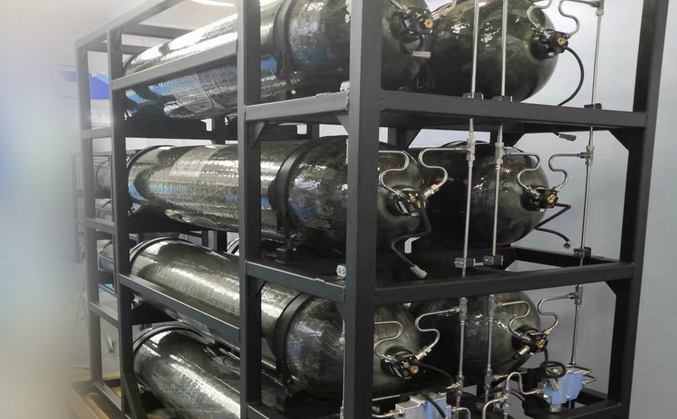
Hydrogen fuel vehicle hydrogen storage tube: mandrel + liquid nitrogen cooling process, bending titanium alloy tube (R = 1D) at -196 ℃, inhibit rebound.
Photovoltaic heat exchanger: copper tube ultra-small radius (R = 0.9D) laser-assisted bending to maintain the inner wall finish (Ra ≤ 0.8μm).