How to Eliminate Experience Dependency in Tube Bending? | Huashun Technical Insight
author: Huashun Machinery
2026-05-08

1. Experience: The Once Most Difficult Asset to Replicate in Bending
In the past, a skilled tube bending master needed years or even a decade to develop the right "feel"—judging mandrel position by sound, assessing tool wear from chip formation, and correcting springback compensation by measurement. This tacit knowledge formed the experience barrier in tube bending.
With the aging of skilled technicians and fewer young entrants, the gap in experience inheritance has become a real challenge for many manufacturers.
2. Huashun's Answer: Transforming Experience into Systematic Capability
As one of the drafting units for China's national standards on CNC pipe bending machines and bending machine safety, Huashun Machinery has long been committed to shifting tube bending from "human-dependent" to "system-reliant." Our goal is not to replace operators but to let the equipment take over the judgments and adjustments that once relied on experience.
The following three areas are typical scenarios where experience was once critical but can now be systematically handled by Huashun equipment.
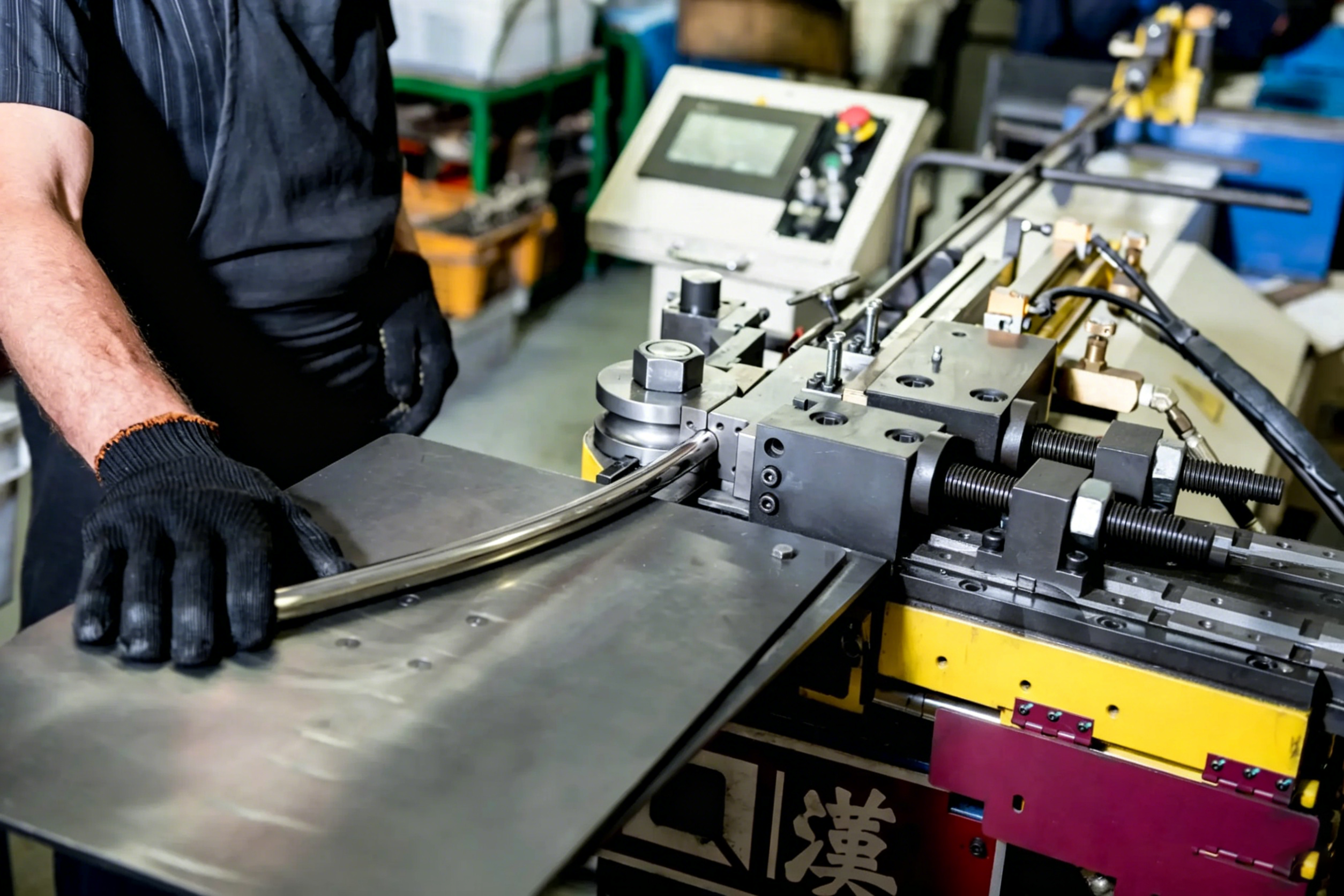
3. Area 1: Tool Change & Clamping Setup – From "Feel" to "Data"
Traditional pain point: After changing tooling, clamping force depended on the master's feel when tightening bolts. Over-tightening damaged the tube wall; under-tightening caused slipping or dimensional errors. Results varied between operators.
Huashun solution:
Hydraulic clamping system: Clamping force is set and maintained by the system, unaffected by human variation.
High-rigidity structure: The clamping base uses 8 high-strength screws (common in the industry: only 4), ensuring no loosening over long-term use.
Programmed recall: Clamping parameters and speed profiles for each tool set can be stored and loaded with one touch during changeover.
Hydraulic clamping system: Clamping force is set and maintained by the system, unaffected by human variation.
High-rigidity structure: The clamping base uses 8 high-strength screws (common in the industry: only 4), ensuring no loosening over long-term use.
Programmed recall: Clamping parameters and speed profiles for each tool set can be stored and loaded with one touch during changeover.
4. Area 2: Bending Programming – 3D Visualization, as Easy as Building Blocks
Traditional pain point: Programming required understanding complex coordinate relationships. Beginners often needed multiple trial bends to get a qualified program, wasting material and time.
Huashun solution:
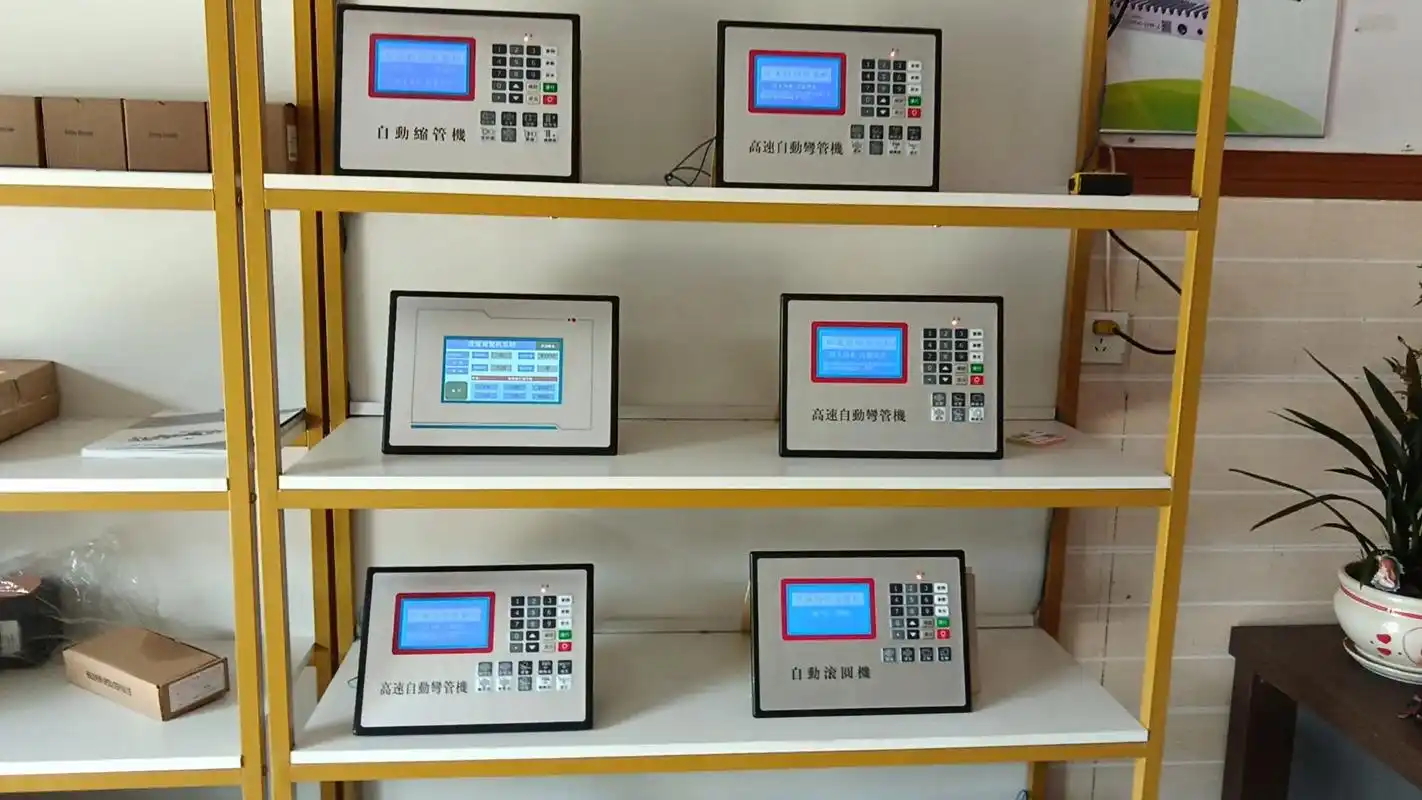
Dual programming modes: Supports XYZ coordinate programming and YBC working value programming, adapting to different operator preferences.
Real-time 3D display: Shows the bending process and final shape on a 10-inch touchscreen – what you see is what you get.
Program library management: Stores thousands of machining programs for batch recall, eliminating repetitive input errors.
Automatic positioning: Y-axis auto-positioning ensures consistent starting position every time.
Dual programming modes: Supports XYZ coordinate programming and YBC working value programming, adapting to different operator preferences.
Real-time 3D display: Shows the bending process and final shape on a 10-inch touchscreen – what you see is what you get.
Program library management: Stores thousands of machining programs for batch recall, eliminating repetitive input errors.
Automatic positioning: Y-axis auto-positioning ensures consistent starting position every time.
5. Area 3: Springback & Elongation Compensation – First Piece Qualified, No More “Trial and Error”
Traditional pain point: Springback varies between material batches. Experienced masters had to manually adjust compensation values based on intuition, often wasting several tubes to get it right.
Huashun solution:
Systematic compensation mechanism: The control system includes a material property library. Operators simply input material type and wall thickness, and the system automatically calculates initial compensation values.
First-piece verification & fine-tuning: After bending the first piece, measure the actual angle and length; the system can adjust compensation parameters with one click – no reprogramming required.
Batch consistency assurance: Once compensation is locked, all subsequent parts automatically follow the same values, ensuring dimensional consistency across the batch.
Systematic compensation mechanism: The control system includes a material property library. Operators simply input material type and wall thickness, and the system automatically calculates initial compensation values.
First-piece verification & fine-tuning: After bending the first piece, measure the actual angle and length; the system can adjust compensation parameters with one click – no reprogramming required.
Batch consistency assurance: Once compensation is locked, all subsequent parts automatically follow the same values, ensuring dimensional consistency across the batch.
6. More Than a Machine – A Platform for “Experience Digitization”
The Huashun proprietary control system not only controls machine movements but also carries the process database accumulated from serving thousands of customers over nearly two decades. Every machine shipped comes preloaded with recommended parameters for common materials (carbon steel, stainless steel, copper, aluminum, etc.). This means:
7. Conclusion: Make Bending an Engineering Discipline, Not a Craft
The essence of tube bending is the controlled deformation of material under force. In the past, due to limited sensing capabilities in equipment, this control had to rely on human experience. Today, with advances in sensors, servo control, and software, tube benders can "see" the process, "remember" parameters, and "compensate" deviations.
Why Tube Swaging Deserves a Closer Look in Your Production Line
Application of tube reducing machines in the metal furniture industry
Related Article

Explore Huashun's MC-405CNC-3A fully automatic aluminum cutting machine, featuring servo feeding, horizontal sawing, pneumatic clamping, and touchscreen PLC control.
MC-405CNC-3A Fully Automatic Aluminum Cutting Machine: Servo Feeding and Integrated Cutting