
Environmental Impact on CNC Benders and Fixes

1. Temperature Effects
- Hydraulic Oil Viscosity Changes: Thickening at low temperatures / thinning at high temperatures
Solution: Use temperature-controlled hydraulic oil tank to maintain oil temperature at 40 ± 5°C.
- Servo Motor Overheat Alarm: Poor heat dissipation causes power derating
Solution: Install forced air cooling system; regularly clean motor cooling fins.
- Thermal Deformation of Mechanical Components: Different metal coefficients of thermal expansion (e.g., guide rails and ball screws)
Solution: Maintain constant temperature workshop environment (recommended 20 ± 2°C); preheat equipment for 30 minutes.
- Reduced Stability of Electrical Components: High temperature accelerates electronic component aging
Solution: Install air conditioning in control cabinets; avoid direct sunlight exposure on equipment.
2. Humidity Effects
- Hydraulic Oil Emulsification and Degradation: Water ingress causes oil oxidation
Solution: Check oil water content daily; replace oil if water content exceeds 0.1%.
- Corrosion of Guide Rails and Ball Screws: Prolonged exposure to relative humidity above 70%
Solution: Apply long-lasting anti-rust grease (e.g., Molykote HP-300).
- Electrical Short-Circuit Risk: Condensation causes PCB corrosion
Solution: Place desiccant packs inside control cabinets; use humidity sensors linked to dehumidifiers.
- Mold Surface Adhesion: High humidity increases friction between material and mold
Solution: Add PTFE coating on mold surfaces; control working area humidity at 45–65% RH.
3. Dust Effects
- Linear Scale/Encoder Reading Errors: Dust obstructs optical signals
Solution: Install IP54 protective covers; clean reading heads weekly with water-free ethanol.
- Pneumatic Valve Core Sticking: Particulates enter solenoid valves
Solution: Install 0.01 μm precision filters at air inlets; perform regular drainage.
- Accelerated Guide Rail Wear: Abrasive particles mix with grease forming grinding paste
Solution: Use sealed chip scrapers; switch to automatic grease replenishment system.
- Reduced Cooling Fan Efficiency: Dust blocks airflow passages (>3 mm dust buildup)
Solution: Perform monthly reverse blow with compressed air (pressure ≤ 0.3 MPa).
Recommended Key Protective System Configurations
- Environmental Monitoring System
- Real-time monitoring: temperature & humidity sensors + dust particle counters (PM2.5 threshold alarms)
- Linked controls: automatic activation of air conditioning, dehumidifiers, and fresh air systems
- Active Protection Measures
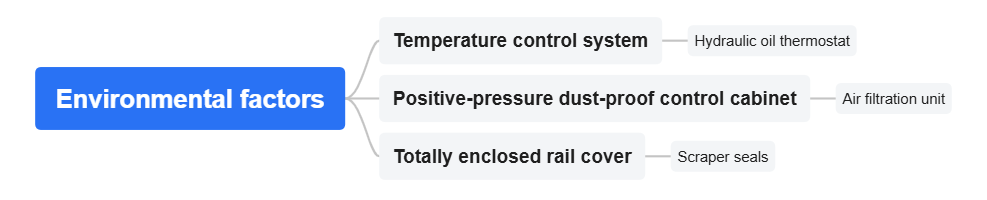
- Regular Maintenance
- Hydraulic oil testing: viscosity, water content, contamination analysis; frequency: every 500 operating hours
- Air line filters: filter element replacement and air tank drainage; frequency: weekly
- Linear scale system: optical channel cleaning with alcohol wipes; frequency: daily
- Full machine dust removal: vacuum cleaning only (avoid direct compressed air blowing); frequency: per shift
Fault Diagnosis Flowchart

Technical Notes:
- Recommended hydraulic oil: ISO VG46 anti-wear hydraulic oil (e.g., Mobil DTE 25)
- Precision motion components (ball screws, guide rails) must meet ISO 12944-6 corrosion protection standard, category C4
- Control cabinet protection rating: minimum IP54 (dust ingress ≤ 1 mg/m³)
- Implementing these measures can reduce environment-related faults by ≥ 70% and extend major overhaul intervals up to 30,000 hours.
CNC Pipe Bending Machine Die Size Chart
Fixing Loose CNC Bender Parts


