Why Tube Swaging Deserves a Closer Look in Your Production Line
author: Huashun Machinery
2026-05-21

Think about the last time you struggled to assemble a tube into a fitting. Maybe the end was too large. Maybe the fit was loose, requiring welding or glue. Or maybe — just maybe — the tube end wasn't reduced properly before it reached assembly.
In tube fabrication, most of our attention goes to cutting and bending. But what happens at the tube ends after cutting and before assembly is often overlooked. And that oversight can cost you — in rework, weak joints, and field failures.
The Hidden Value of Tube Swaging
Swaging — also called tube reducing or end forming — is the process of cold-forming the tube end to a smaller diameter. It can be a straight reduction, a tapered transition, or even a complex profile with ribs or stops. The result is a precise, strong, and ready-to-assemble end.
Why does it matter? Because a properly swaged tube end eliminates the need for costly fittings, reduces welding, and speeds up assembly. It also creates a mechanically locked joint that outlasts many other joining methods.
But here‘s the problem: many shops still treat swaging as an afterthought — a secondary operation done on a separate machine, often with inconsistent results.
Why does it matter? Because a properly swaged tube end eliminates the need for costly fittings, reduces welding, and speeds up assembly. It also creates a mechanically locked joint that outlasts many other joining methods.
But here‘s the problem: many shops still treat swaging as an afterthought — a secondary operation done on a separate machine, often with inconsistent results.
The Cost of Ignoring Proper Tube Reduction
Take a typical application: a hydraulic line where a tube must insert into a hose fitting. If the tube end is not reduced enough, it won’t enter the fitting. If it‘s reduced too much, the joint will leak. Hand
operated or poorly controlled swagers produce inconsistent reductions — and every inconsistency leads to scrap or rework.
In high-volume automotive or HVAC production, a 2% rejection rate due to poor swaging can add up to thousands of dollars per week. Worse, a loose joint that passes initial inspection may fail in the field, leading to warranty claims and reputation damage.
In high-volume automotive or HVAC production, a 2% rejection rate due to poor swaging can add up to thousands of dollars per week. Worse, a loose joint that passes initial inspection may fail in the field, leading to warranty claims and reputation damage.
Why Precision Swaging Is Non-Negotiable
At Huashun, we’ve seen hundreds of applications across automotive, furniture, aerospace, and industrial equipment. One pattern is clear: manufacturers who invest in CNC-controlled, hydraulic swaging machines achieve:
Zero rework on tube ends
Consistent press-fit forces from part to part
Elimination of secondary welding or bonding for many joints
Lower total assembly cost
Zero rework on tube ends
Consistent press-fit forces from part to part
Elimination of secondary welding or bonding for many joints
Lower total assembly cost
Integrating Swaging with Your Workflow – Not a Separate Step
The best swaging solution is one that works seamlessly with your cutting and bending lines. Huashun offers integrated systems where swaging is performed inline with cutting or directly before bending.
Cut-to-swage: A tube cutoff machine delivers cut-length tubes directly to a swaging station. No intermediate handling.
Bend-to-swage: For applications where swaging must occur after bending (or between bends), Huashun‘s modular tooling allows swaging heads to be positioned along the line.
Standalone but smart: Even as a standalone unit, our CNC swager stores up to 200 programs, allowing instant changeover between different tube sizes and reduction profiles.
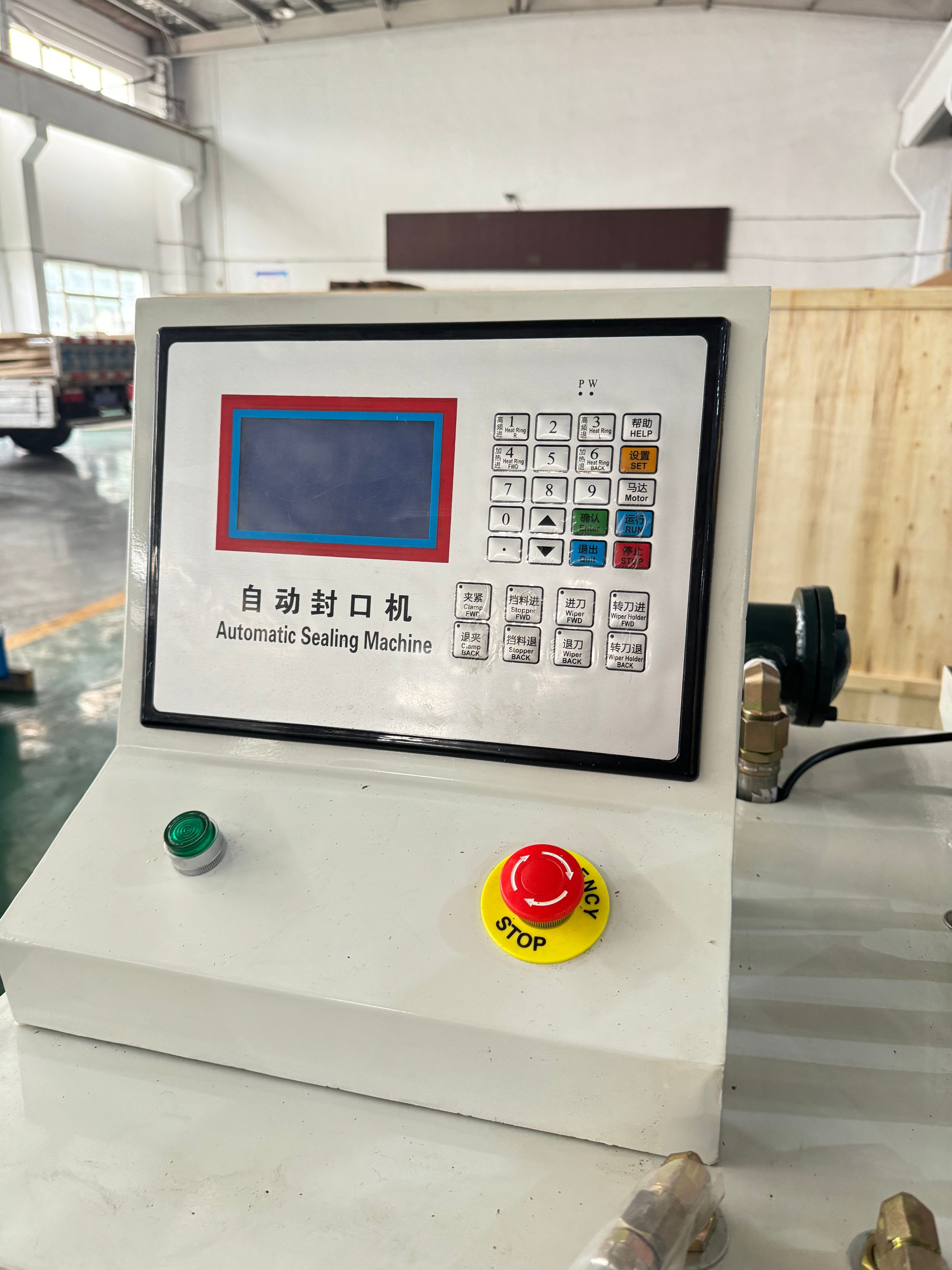
All of this is controlled through a touchscreen interface. Operators load the tube, select the job, and the machine handles the rest — clamping, feeding, swaging, and ejecting.
Cut-to-swage: A tube cutoff machine delivers cut-length tubes directly to a swaging station. No intermediate handling.
Bend-to-swage: For applications where swaging must occur after bending (or between bends), Huashun‘s modular tooling allows swaging heads to be positioned along the line.
Standalone but smart: Even as a standalone unit, our CNC swager stores up to 200 programs, allowing instant changeover between different tube sizes and reduction profiles.
All of this is controlled through a touchscreen interface. Operators load the tube, select the job, and the machine handles the rest — clamping, feeding, swaging, and ejecting.
Huashun’s Approach: Precision, Power, Repeatability
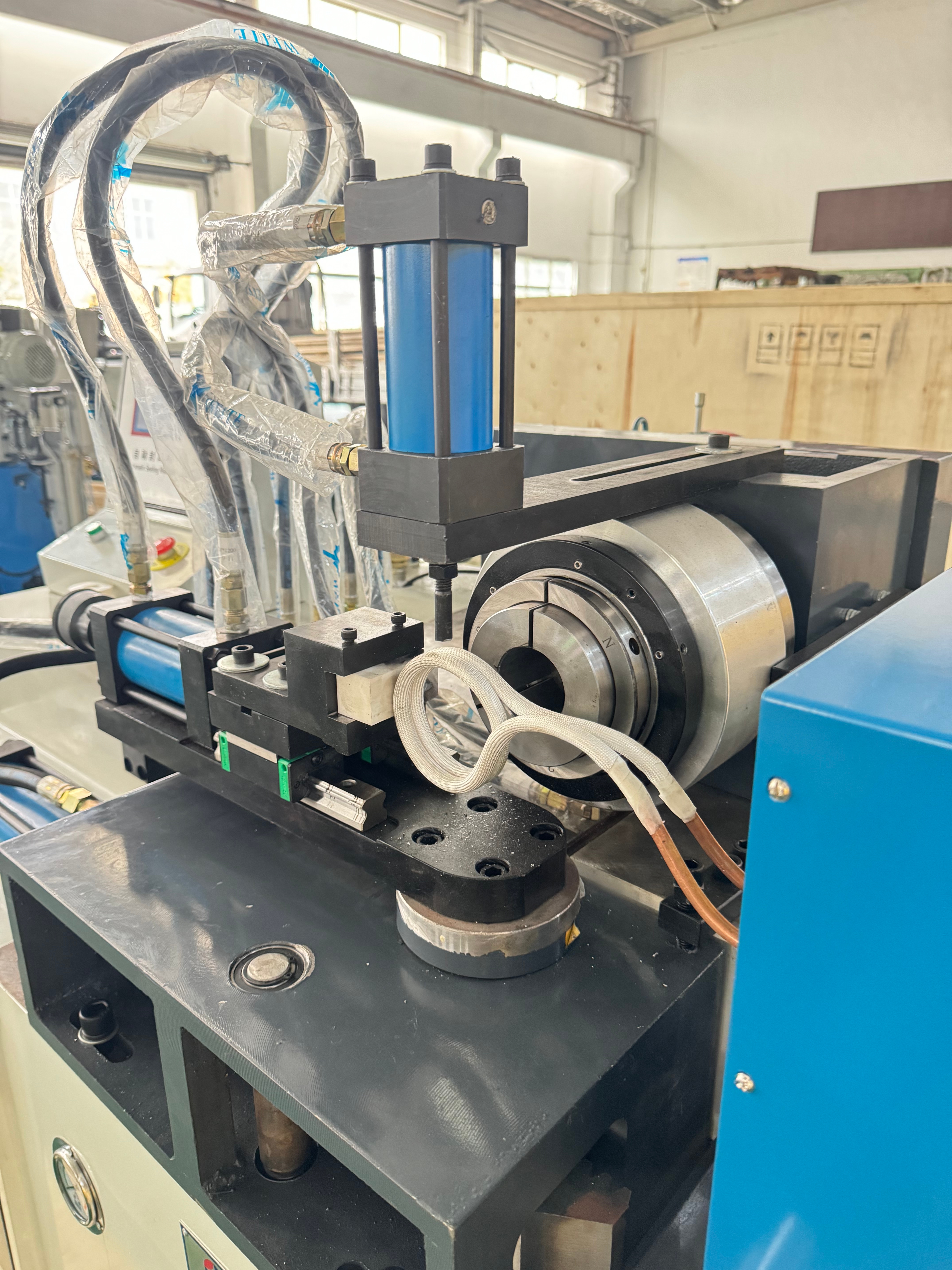
At Huashun, we design swaging machines for real-world production. Key features include:
Hydraulic power with ±0.05mm repeatability — ensures every reduced end is identical.
Quick-change tooling — switch from 10mm to 20mm in under 10 minutes.
Automatic feeding options — for high-volume, lights-out production.
CE and ISO9001 certified — meeting international quality standards.
With over 25 years of experience, Huashun has supplied swaging systems to customers in automotive, furniture, HVAC, and general manufacturing across the globe, including manufacturers serving the high-speed rail and energy sectors.
Start Reducing Tube Ends the Right Way
Next time you face a loose fitting, a leaking joint, or a costly adapter, ask yourself: could a properly swaged tube end solve this?
At Huashun, we help manufacturers take the guesswork out of tube reducing. From standalone CNC swagers to fully integrated cutting-swaging-bending lines, we build systems that deliver consistent, strong, and ready-to-assemble tube ends — every time.
At Huashun, we help manufacturers take the guesswork out of tube reducing. From standalone CNC swagers to fully integrated cutting-swaging-bending lines, we build systems that deliver consistent, strong, and ready-to-assemble tube ends — every time.
Get in touch to discuss your tube swaging needs. We’ll show you how to cut fittings, reduce rework, and assemble with confidence.
Pipe Processing Equipment for HVAC and Refrigeration Systems
How to Eliminate Experience Dependency in Tube Bending? | Huashun Technical Insight
Related Article

Explore Huashun's MC-405CNC-3A fully automatic aluminum cutting machine, featuring servo feeding, horizontal sawing, pneumatic clamping, and touchscreen PLC control.
MC-405CNC-3A Fully Automatic Aluminum Cutting Machine: Servo Feeding and Integrated Cutting