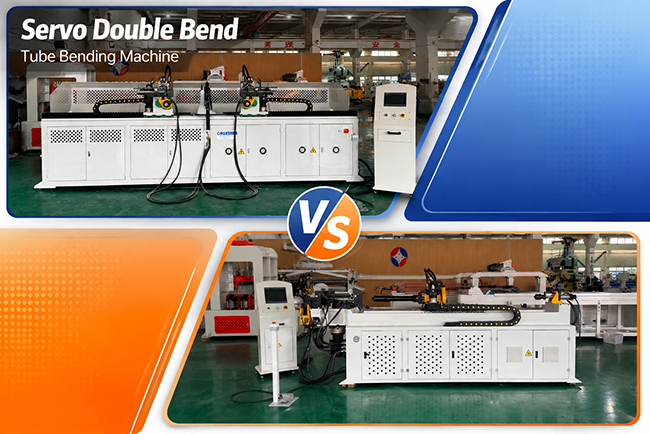
Precautions for the use of pipe bending machine

1. Inspection items before starting the pipe bender:
Whether the oil tank is full, whether the hydraulic oil reaches the standard position.
Hydraulic station is water-cooled refrigeration, or air-cooled refrigeration; water-cooled need to be connected to the water pipe; air-cooled do not need to be connected to the water pipe, but check whether the air-cooled motor can be turned on properly, whether the fan is working properly.
Whether the oil port is loose, whether the oil leakage interface.
Whether the lubricant injection point of each slide guide is lack of oil.
Whether the connection points or screws of each mechanical movement mechanism are loose.
Whether the electric shock prevention device is effective.
2. Start the pipe bender and check things:
Whether there is noise in the hydraulic oil station system.
Whether the motor running direction is correct, if not, adjust the wiring sequence of the three-phase power supply.
Hydraulic system oil pressure is normal, oil pressure is too high will damage the hydraulic components; oil pressure is too low bender can not work properly.
3. Setting parameters: according to the processing drawings to select the corresponding diameter and length of the pipe, the operating screen to set the bending parameters and angle.
4. Adjustment of molds and pusher: according to the drawings to adjust the mechanical position, length, angle and other positions of each mold and auxiliary pusher on the pipe bender.
5. Adjust the limit switch and guide rail fastening bolts: according to the travel of the feeding trolley, adjust the position of the limit switch and adjust the fastening bolts of each guide rail so that it can press the pre-bent pipe.
6. Adjust the clamping cylinder: according to the parameters on the drawing, adjust the clamping cylinder to press the pre-bent pipe tightly.
7. Adjust the position of the pipe to start bending: the pre-bent pipe will be adjusted to the appropriate position of the various molds and auxiliary push fixtures, you can try to test the specific operation of the bend. Step on the foot switch to operate the machine for bending operations.
8. Abnormalities and troubleshooting: When abnormalities occur during the bending process, press the emergency stop button to stop the operation, analyze the cause of the failure, and then proceed to the next operation until the pipe can be bent normally. Bender after checking the existence of potential safety hazards or the system itself is faulty, you need to ask the manufacturer to carry out on-site maintenance.
9. Product parameter check: After the completion of the test bend, check whether the product meets the requirements specified in the drawings. If it meets the requirements specified in the drawings, the test is successful, you can proceed to the next stage of work.
Correct Range of Pipe Bending Radius
Why can not replace bending lube with lubricant ?
Related Article