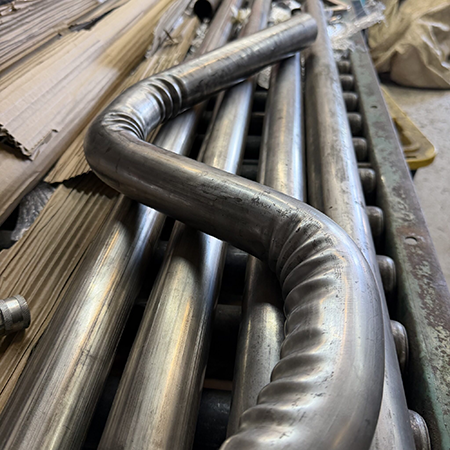
What Is the Difference Between a Double-Bend (Left-and-Right) Tube Bender and a Standard Tube Bending Machine?
author: Huashun Machinery
2026-08-11
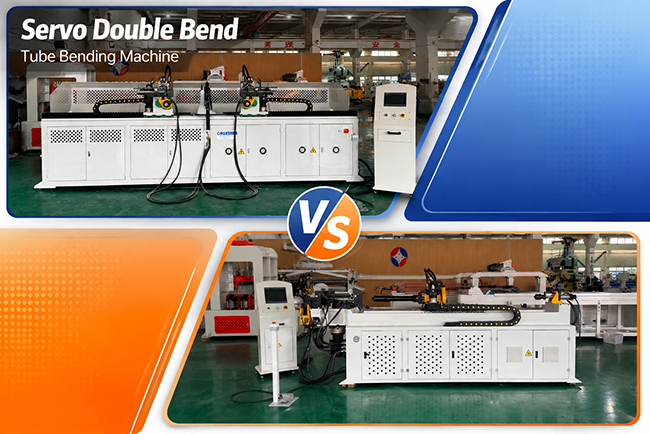
In tube processing, choosing the right tube bending machine can directly affect production efficiency, dimensional accuracy, and the quality of the finished product. This is particularly important when manufacturing U-shaped tubes, symmetrical components, or parts that require bending in both left and right directions. A standard tube bender may require repeated adjustments and repositioning, while a double-bend machine can perform bends in different directions within a single processing cycle.
So, what is the difference between a double-bend tube bending machine and a standard tube bender? Which type is better suited to different production requirements? The following comparison explains the key differences and typical applications.
1. What Is a Double-Bend (Left-and-Right) Tube Bending Machine? How Does It Work?
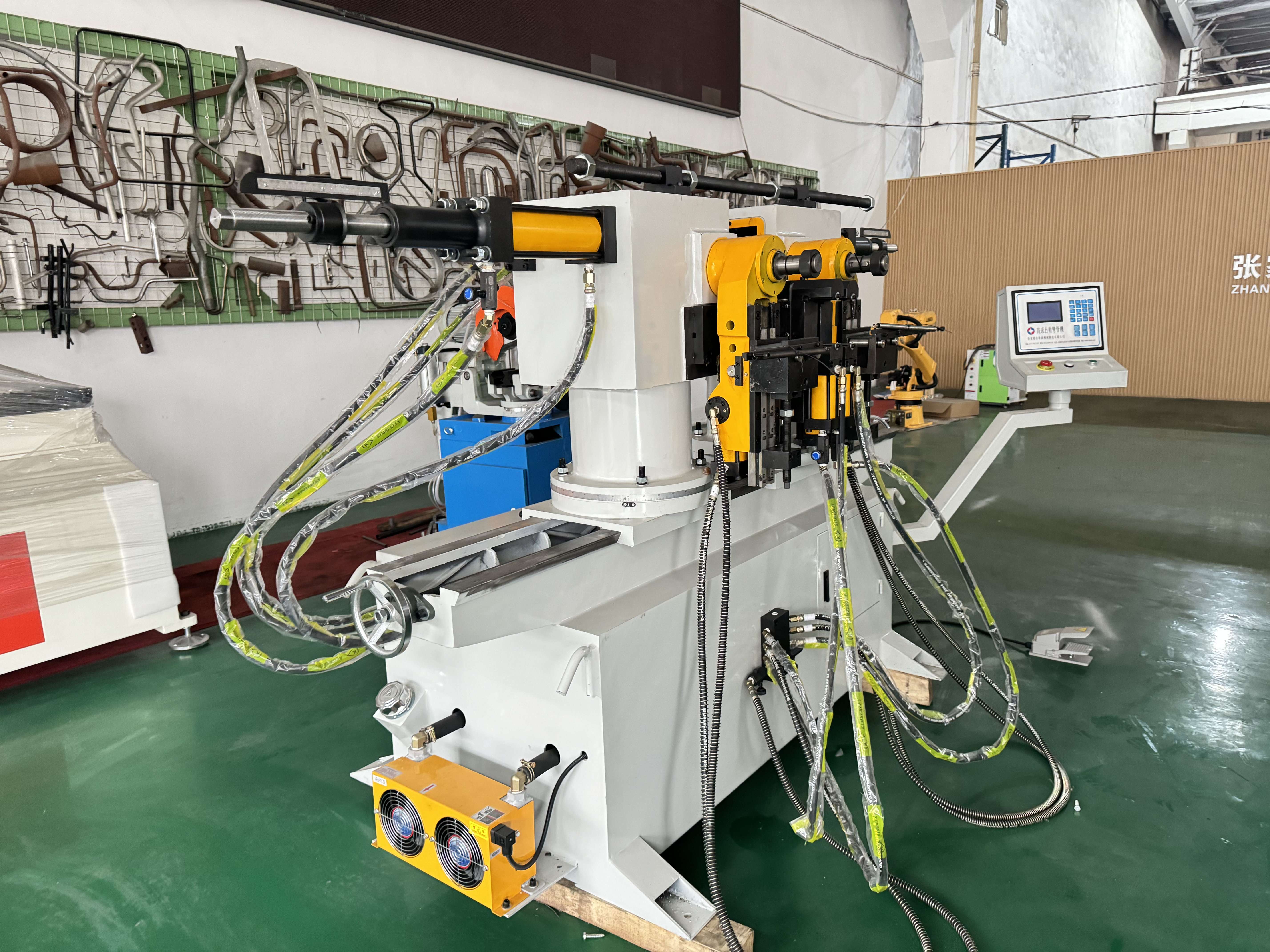
A double-bend tube bending machine, also known as a left-and-right tube bender, is designed with two bending mechanisms. Depending on the programmed process, it can perform left-hand bends, right-hand bends, and continuous bends in multiple directions. Some models are equipped with servo control systems to accurately coordinate feeding, rotation, and bending operations.
Compared with a standard tube bending machine, a double-bend model is particularly useful for symmetrical tube components. After the tube is positioned once, the machine can continue bending in different directions without frequent removal, turning, or repositioning of the workpiece.
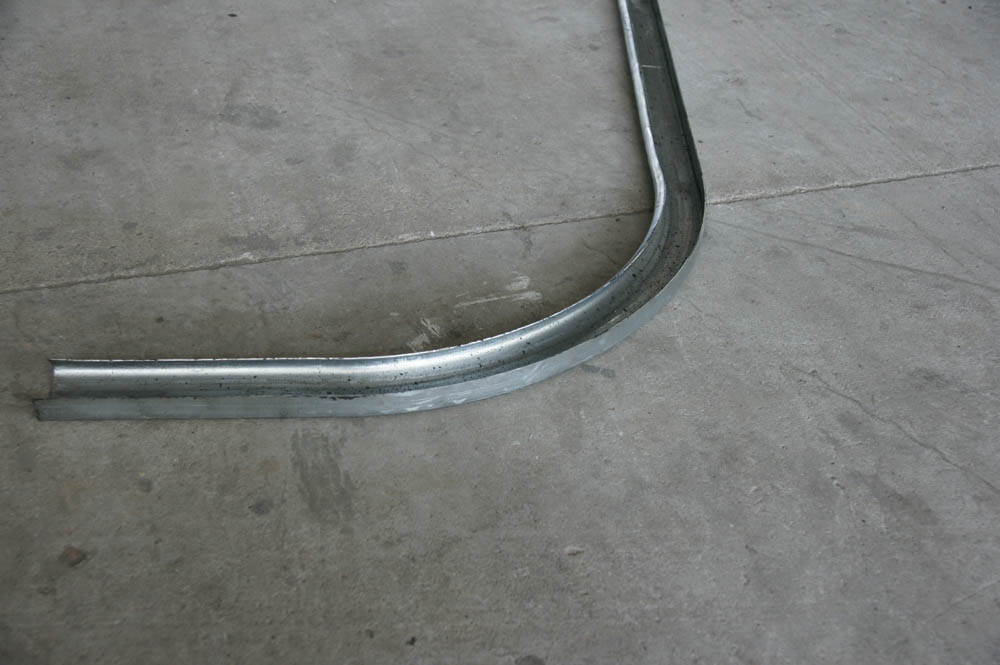
This is especially useful for U-shaped tubes, S-shaped tubes, and other components with complex spatial structures. By reducing manual repositioning, the machine can minimize positioning errors and provide more consistent results in batch production.
2. Double-Bend (Left-and-Right) vs. Standard Tube Bending Machine: Four Key Differences
Different structures and bending methods.
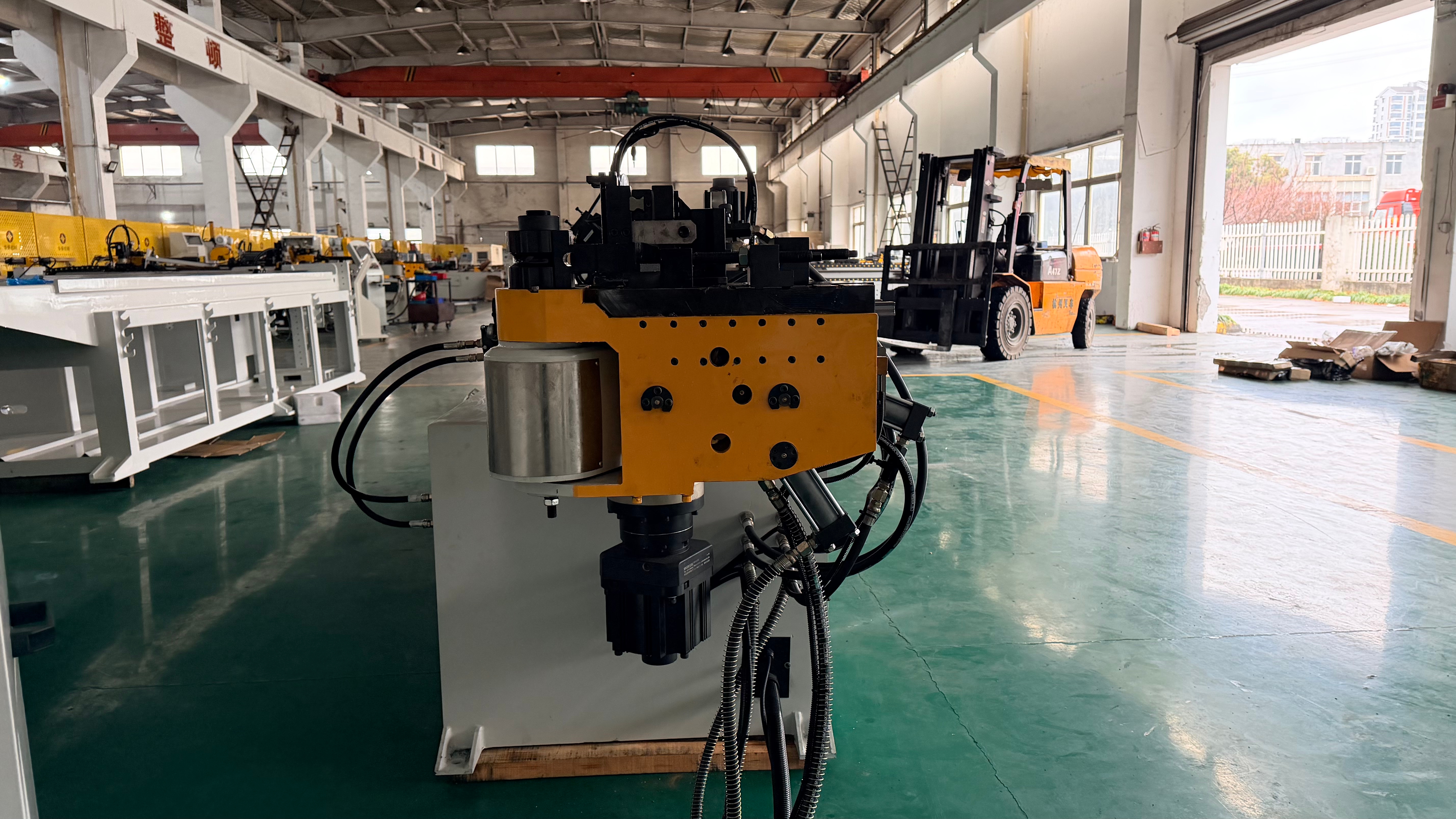
Standard tube bending machines generally use a single bending head and are mainly designed for bending in one direction. If a component requires both left- and right-hand bends, the operator may need to manually adjust or turn the tube before continuing. A double-bend machine uses left- and right-hand bending mechanisms, reducing the need for intermediate repositioning and making it more suitable for complex tube components.
Different levels of processing accuracy.
Repeated clamping and repositioning on a standard machine can introduce positioning deviations, affecting tube length, bending angles, and symmetry. A double-bend machine reduces the number of repeated setups. When combined with accurate positioning and programmed control, it can provide better dimensional consistency, especially in large-volume production.
Different production efficiency.
For simple single-direction bends, the efficiency difference between the two machine types may not be significant. However, when a product requires continuous left- and right-hand bending, a standard machine may require additional turning and positioning operations. A double-bend machine can reduce these auxiliary steps, shorten the overall production cycle, and reduce manual intervention.
Different application ranges.
Standard tube benders are suitable for conventional products involving simple bends or multiple bends in the same direction. They are relatively simple to operate and can be a cost-effective choice for basic applications. Double-bend machines are better suited to U-shaped, S-shaped, symmetrical, and three-dimensional tube components, and can be configured for different tube materials and sizes depending on the machine model.
3. Applications of Double-Bend (Left-and-Right) Tube Bending Machines
The main advantages of double-bend machines are most apparent when processing complex tube components and handling high-volume production. In furniture manufacturing, they can be used for chair frames, table frames, bed frames, and various metal support structures. In fitness equipment production, they are also suitable for certain symmetrical frames, handles, and support tubes.
In the automotive and motorcycle industries, products such as seat frames, chassis components, and bumper supports often require bending in multiple directions. A double-bend machine can reduce the number of intermediate repositioning operations required during production.
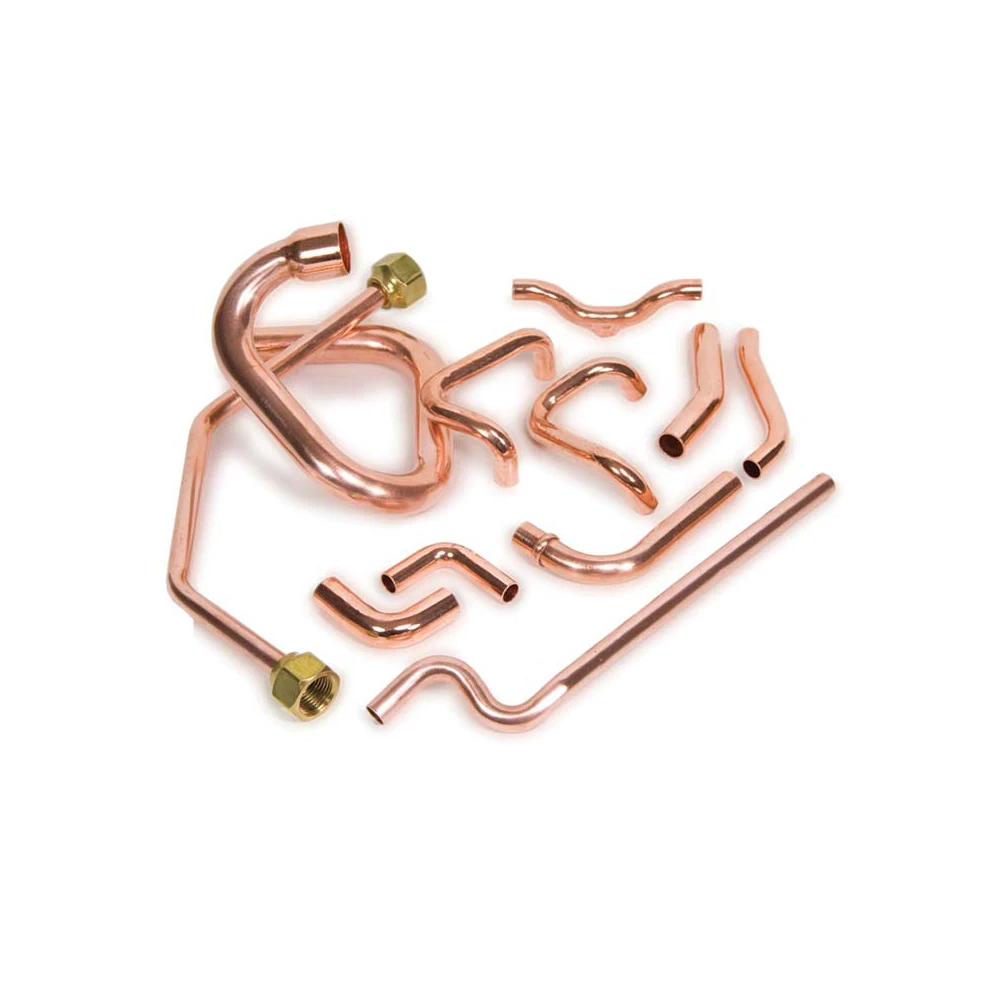
In the appliance and HVAC industries, U-shaped tubes, connecting tubes, and other precision tube components can also be processed using an appropriate double-bend machine according to the material, tube diameter, and wall thickness.
In addition, products such as architectural railings, engineering machinery tubing, lighting brackets, and metal decorative components can benefit from double-bend technology when they involve continuous bending in both directions.
4. How to Choose: When Should You Use a Double-Bend or a Standard Tube Bending Machine?
A more advanced machine is not necessarily the best choice for every application. The decision should be based on the actual production process.
If your main products require simple single-direction bending, production volumes are relatively small, and cycle time is not a major concern, a standard tube bending machine can usually meet the requirements. It also offers a relatively lower initial investment.
If the products involve left- and right-hand bends, U-shaped structures, symmetrical designs, or three-dimensional bending, and continuous batch production is required, a double-bend machine is worth considering. It can reduce repeated clamping and manual adjustments while improving production efficiency and dimensional consistency.
A double-bend tube bending machine and a standard tube bending machine are not simply different levels of equipment. They are designed for different processing requirements.
When selecting a tube bending machine, manufacturers should consider tube material, diameter, wall thickness, bending direction, component structure, production volume, and required cycle time.For complex two-directional bending and high-volume production, a double-bend machine can provide clear advantages in efficiency and consistency. For conventional single-direction bending, a standard tube bender may be the more economical and practical solution. Choosing equipment according to the actual production process is the key to improving productivity, controlling costs, and maintaining stable product quality.
How Tube Processing Technology Supports Modern Manufacturing
Tube Cutting Methods: Laser Cutting vs Saw Cutting
Related Article

Discover how tube cutting, bending, rolling, and end forming machines help transform metal tubes into components used in furniture, vehicles, fitness equipment, HVAC systems, and industrial products.
How Tube Processing Technology Supports Modern Manufacturing

Compare laser tube cutting and saw cutting methods to understand their differences in precision, speed, cost, and applications. Learn how to choose the right tube cutting solution.
Tube Cutting Methods: Laser Cutting vs Saw Cutting