
Breaking Through with Automation, Empowering Efficiency — The Five Core Values of Production Process Automation in Manufacturing
author: Huashun Machinery
2026-05-08

In today’s increasingly competitive manufacturing industry, efficiency, quality, and cost control have become the key factors that determine whether a company can continue to grow and remain competitive.Traditional production models that rely heavily on manual labor are no longer able to meet the modern manufacturing demands for stability, speed, and precision.As a result, production process automation is becoming an essential step in the transformation and upgrading of manufacturing enterprises.
From automated equipment and intelligent control systems to digital production management, automation is far more than simply “replacing labor with machines.” It represents a complete upgrade of the manufacturing process itself. It helps companies overcome efficiency bottlenecks, reduce human error, optimize operating costs, and achieve more precise and controllable production management.For manufacturers, the value of automation goes far beyond simply reducing labor costs.
1. Significantly Improving Production Efficiency and Expanding Capacity
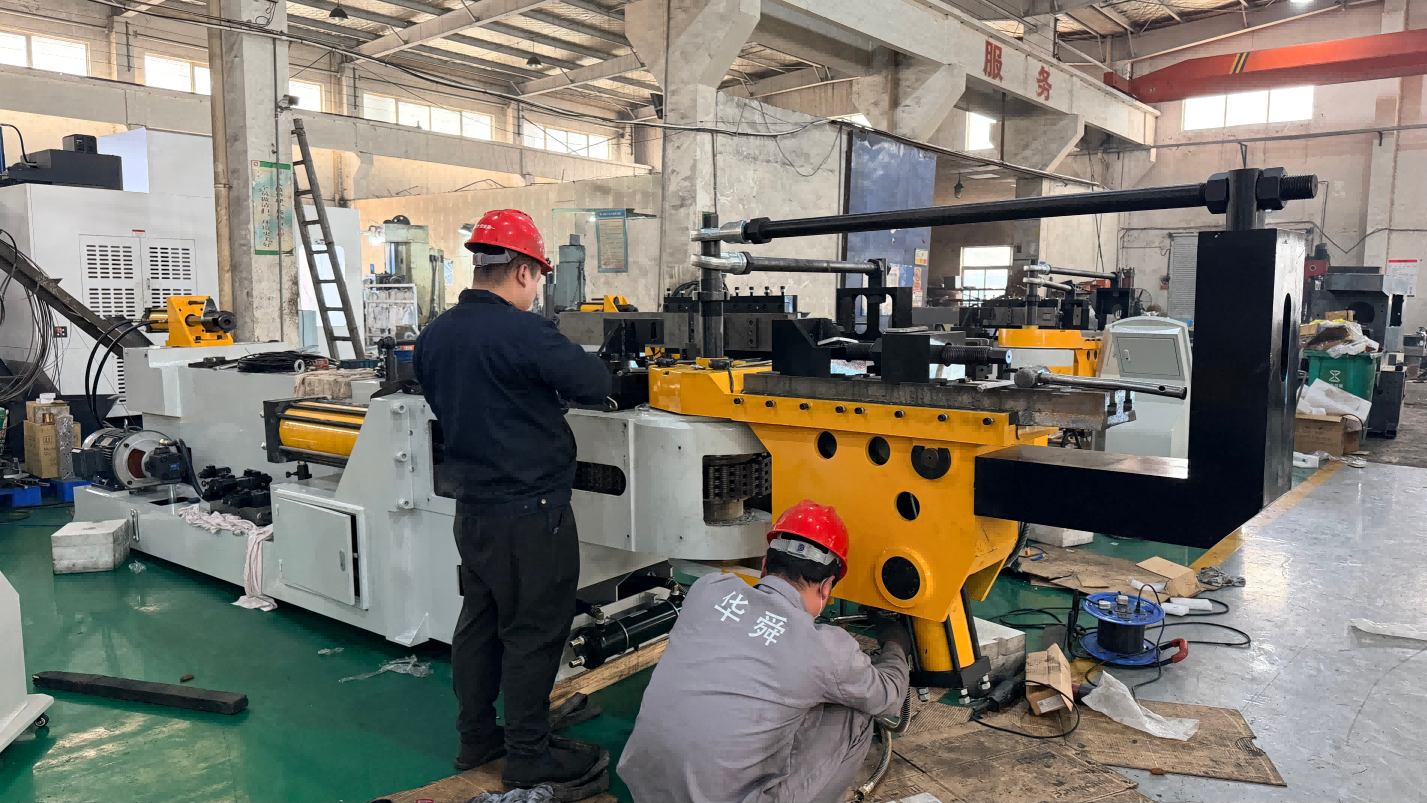
Traditional manual production is often affected by worker fatigue, operational consistency, and skill levels. After long hours of repetitive work, both efficiency and stability tend to decline.Automated equipment, however, can operate continuously for extended periods without fatigue or downtime, requiring only regular maintenance to maintain stable production performance.In industries such as automotive components, tube processing, and metal forming, many companies have increased production efficiency by more than 30% after introducing automated production lines. Delivery cycles have also been significantly shortened.
With stable and continuous equipment operation, manufacturers can handle larger order volumes and respond more effectively to peak production demands.
2. Ensuring More Stable Product Quality and Reducing Defect Rates
In manufacturing, slow production is a problem — but unstable quality is an even bigger one.Manual operations can easily lead to assembly deviations, dimensional inconsistencies, or parameter errors. Once defects occur on a large scale, they increase rework costs, material waste, and may even damage customer trust.Automated systems use precise programming and sensor monitoring to complete every process according to consistent standards, ensuring higher production accuracy and repeatability.Especially in precision manufacturing, automation can achieve millimeter-level or even micron-level accuracy, greatly reducing human error.Many manufacturers report defect rates dropping by more than 50% after automation upgrades, while also reducing material waste and rework time, resulting in more efficient and controllable production.
3. Reducing Labor Pressure and Optimizing Cost Structure
In recent years, manufacturers around the world have faced increasing labor shortages and rising labor costs.For repetitive and labor-intensive tasks, relying heavily on manual workers not only increases costs but also affects production stability due to employee turnover.Production automation can replace repetitive operations such as loading and unloading, material handling, assembly, and inspection, reducing dependence on frontline labor.More importantly, automation is not simply about “reducing employees.” It allows companies to allocate human resources more effectively.Businesses can redirect manpower toward higher-value activities such as R&D, process optimization, customer service, and market development, allowing talent to contribute where it matters most.
4. Improving Workplace Safety and Production Stability
Many manufacturing processes involve hazardous environments, including high temperatures, high pressure, high-speed machinery, dust, or harmful gases.Traditional manual operations in these environments carry significant safety risks and can lead to production interruptions caused by accidents or equipment damage.Automation enables machines to perform dangerous tasks instead of human workers, reducing safety risks at the source.At the same time, modern automation systems are equipped with real-time monitoring, fault alarms, and emergency shutdown functions. If abnormalities occur, the system can respond immediately to prevent larger production issues.For manufacturers, workplace safety is not only about protecting employees — it is also essential for maintaining stable and uninterrupted production.
5. Enabling Data-Driven Management and Smarter Manufacturing
One of the greatest advantages of automation is data.During production, automated equipment continuously collects data such as output, operating conditions, energy consumption, equipment status, and processing accuracy.After analysis, this data helps companies optimize production processes more scientifically and efficiently.
For example:
Equipment data can help predict potential failures before breakdowns occur, reducing downtime;
Quality analysis can quickly identify weak points in the production process;
Production efficiency data can improve scheduling and equipment utilization;
Energy consumption analysis can help lower operational costs.
Problems that once relied on experience and guesswork can now be solved through accurate data analysis, allowing manufacturers to shift from experience-based management to data-driven decision-making.
This is one of the key reasons why more manufacturers are accelerating their automation upgrades in the era of smart manufacturing.
Production process automation is no longer just a technological upgrade — it has become a critical strategy for enhancing manufacturing competitiveness.
It not only improves efficiency and stabilizes product quality, but also helps reduce costs, improve safety, and support lean, digitalized production management.
As the manufacturing industry continues moving toward intelligent production, companies that adopt automation earlier will gain a stronger competitive advantage in the future market.For manufacturers today, the question is no longer whether to implement automation, but how quickly and effectively they can move forward with it.
The Integration of Laser Tube Cutting and Tube Bending Technology Drives Greater Efficiency in Tube Processing
MCJG120 3D Laser Tube Cutting Machine – Powerful, Precise, and Built for Your Workshop
Related Article

Discover how tube cutting, bending, rolling, and end forming machines help transform metal tubes into components used in furniture, vehicles, fitness equipment, HVAC systems, and industrial products.
How Tube Processing Technology Supports Modern Manufacturing
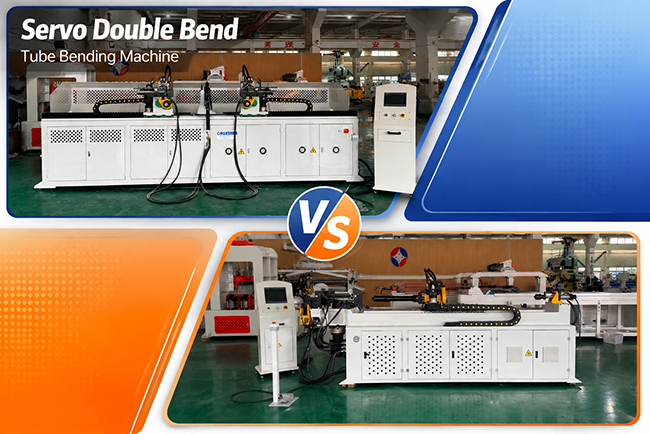
What Is the Difference Between a Double-Bend (Left-and-Right) Tube Bender and a Standard Tube Bending Machine?

