
How to Choose the Right Tube Cutting Machine: 5 Key Factors Every Buyer Should Know
author: Huashun Machinery
2026-07-15

Tube cutting machines play a vital role in modern tube fabrication, serving as the foundation for accurate cutting and efficient production. Whether in automotive manufacturing, furniture production, HVAC systems, metal fabrication, or construction, the performance of a tube cutting machine directly affects product quality, production efficiency, and operating costs.
Many companies focus primarily on the purchase price when selecting a tube cutting machine, overlooking important factors such as cutting accuracy, machine stability, automation, and after-sales support. As a result, they often encounter problems like burrs, inaccurate cuts, frequent downtime, and high maintenance costs. To avoid these issues, it is essential to evaluate a machine from several key perspectives rather than price alone.
1. Cutting Accuracy Determines Product Quality
The first factor to consider is cutting precision. A high-quality tube cutting machine should produce smooth, square, and burr-free cuts while maintaining consistent dimensional accuracy. This minimizes the need for secondary operations such as deburring or grinding, helping manufacturers save both time and labor.
Premium machines are typically equipped with high-precision servo control systems, rigid guide rails, and reliable clamping mechanisms that prevent tube movement during cutting. Whether processing stainless steel tubes, carbon steel pipes, copper tubes, round tubes, square tubes, or irregular profiles, a quality machine delivers consistent cutting performance.
By comparison, low-quality equipment often produces rough edges, angled cuts, and excessive burrs, increasing production costs and reducing product quality.
Many companies focus primarily on the purchase price when selecting a tube cutting machine, overlooking important factors such as cutting accuracy, machine stability, automation, and after-sales support. As a result, they often encounter problems like burrs, inaccurate cuts, frequent downtime, and high maintenance costs. To avoid these issues, it is essential to evaluate a machine from several key perspectives rather than price alone.
1. Cutting Accuracy Determines Product Quality
The first factor to consider is cutting precision. A high-quality tube cutting machine should produce smooth, square, and burr-free cuts while maintaining consistent dimensional accuracy. This minimizes the need for secondary operations such as deburring or grinding, helping manufacturers save both time and labor.
Premium machines are typically equipped with high-precision servo control systems, rigid guide rails, and reliable clamping mechanisms that prevent tube movement during cutting. Whether processing stainless steel tubes, carbon steel pipes, copper tubes, round tubes, square tubes, or irregular profiles, a quality machine delivers consistent cutting performance.
By comparison, low-quality equipment often produces rough edges, angled cuts, and excessive burrs, increasing production costs and reducing product quality.
.
2. Make Sure the Machine Fits Your Production Needs
Every manufacturer works with different tube sizes, wall thicknesses, and materials. Before purchasing a machine, carefully verify its processing capacity, including the supported tube diameter range, wall thickness, and compatible materials.
If your business handles multiple tube specifications or different materials, choosing a versatile machine will improve production flexibility and maximize equipment utilization. A machine capable of processing various tube types allows manufacturers to respond more efficiently to changing customer requirements without investing in multiple machines.
2. Make Sure the Machine Fits Your Production Needs
Every manufacturer works with different tube sizes, wall thicknesses, and materials. Before purchasing a machine, carefully verify its processing capacity, including the supported tube diameter range, wall thickness, and compatible materials.
If your business handles multiple tube specifications or different materials, choosing a versatile machine will improve production flexibility and maximize equipment utilization. A machine capable of processing various tube types allows manufacturers to respond more efficiently to changing customer requirements without investing in multiple machines.


3. Automation Improves Productivity
As manufacturing continues to embrace automation, intelligent tube cutting machines have become the preferred choice for improving productivity.
Modern automatic tube cutting machines integrate automatic feeding, length measurement, precision cutting, unloading, and counting functions into one system. This significantly reduces manual labor while ensuring stable and continuous production.
When comparing machines, manufacturers should also consider cutting speed adjustment, continuous operating capability, and changeover efficiency between different tube sizes. These features contribute directly to higher production output and lower operating costs.
4. Machine Stability Reduces Long-Term Costs
A tube cutting machine is designed for continuous industrial operation, making durability and stability critical considerations.
Machines built with heavy-duty steel frames, premium servo systems, high-quality motors, and durable cutting blades generally provide longer service life and more reliable performance. Stable equipment minimizes vibration, maintains cutting accuracy, and reduces unexpected downtime.
In contrast, machines built with lower-quality components are more likely to experience positioning errors, unstable cutting, and frequent maintenance issues, leading to higher operating expenses over time.
Investing in a reliable machine often delivers greater long-term value than simply choosing the lowest-priced option.

5. Reliable After-Sales Service Matters
Purchasing industrial equipment is a long-term investment rather than a one-time transaction.
A reputable tube cutting machine manufacturer should provide comprehensive after-sales support, including installation, commissioning, operator training, technical assistance, spare parts supply, and maintenance services. Fast technical support helps minimize production interruptions and keeps operations running smoothly.
When comparing suppliers, businesses should evaluate not only machine specifications and pricing but also service quality, technical expertise, warranty coverage, and long-term support. A well-supported machine can significantly reduce maintenance costs and improve return on investment.
Choosing the right tube cutting machine requires more than comparing prices. Manufacturers should carefully evaluate cutting accuracy, processing capacity, automation, machine stability, and after-sales service to ensure the equipment matches their production requirements.
A reliable, high-performance tube cutting machine not only improves product quality and production efficiency but also lowers long-term operating costs. For companies looking to increase productivity and strengthen their competitiveness, investing in the right tube cutting solution is a smart decision that delivers lasting value.
Tube End Reduction vs. Expansion: Which Forming Process Does Your Product Need?
Metal Cutting Technology Upgrades: A Smarter Path to Higher Precision and Productivity
Related Article

Discover how tube cutting, bending, rolling, and end forming machines help transform metal tubes into components used in furniture, vehicles, fitness equipment, HVAC systems, and industrial products.
How Tube Processing Technology Supports Modern Manufacturing
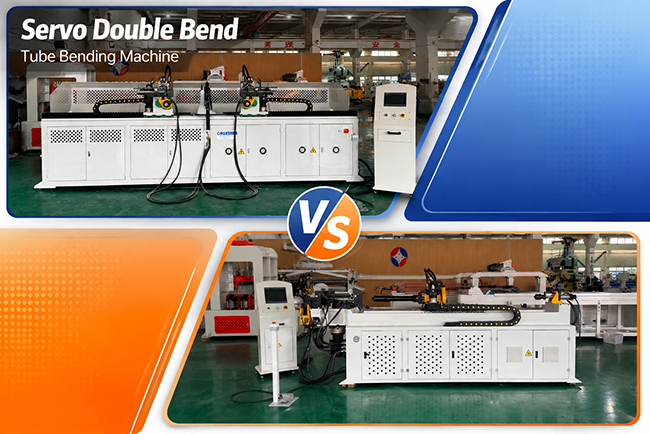
What Is the Difference Between a Double-Bend (Left-and-Right) Tube Bender and a Standard Tube Bending Machine?

