
Why Do Tubes Wrinkle During Bending? Common Causes and Effective Solutions
author: Huashun Machinery
2026-07-29
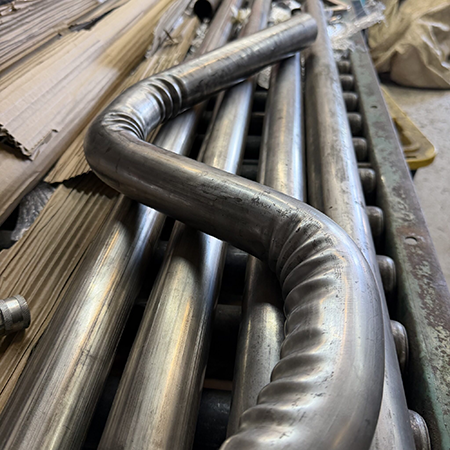
Tube bending is an essential manufacturing process used in industries such as automotive, HVAC, furniture, fitness equipment, aerospace, and heat exchanger production. However, one of the most common quality issues manufacturers encounter is tube wrinkling during the bending process.
Wrinkles not only affect the appearance of the finished product but can also reduce structural strength, increase scrap rates, and lead to costly production delays.
This article explains why tube wrinkling occurs and how manufacturers can effectively prevent it.
Wrinkles not only affect the appearance of the finished product but can also reduce structural strength, increase scrap rates, and lead to costly production delays.
This article explains why tube wrinkling occurs and how manufacturers can effectively prevent it.
What Is Tube Wrinkling?
Tube wrinkling refers to the formation of waves or folds on the inner radius of a bent tube. During bending, the inner wall is subjected to compressive stress while the outer wall experiences tensile stress. When the compressive force exceeds the material's ability to resist deformation, wrinkles begin to form.
Wrinkling is especially common when bending:
- Thin-wall tubes
- Large-diameter tubes
- Soft materials such as aluminum and copper
- Small-radius bends
Common Causes of Tube Wrinkling
1. Incorrect Bend Radius
A bend radius that is too small places excessive compression on the inside of the tube, increasing the likelihood of wrinkles.
Selecting an appropriate centerline radius (CLR) according to the tube diameter and wall thickness is critical for stable bending results.
A bend radius that is too small places excessive compression on the inside of the tube, increasing the likelihood of wrinkles.
Selecting an appropriate centerline radius (CLR) according to the tube diameter and wall thickness is critical for stable bending results.
2. Insufficient Clamp Force
If the clamp die cannot securely hold the tube, the material may slip during bending, causing uneven material flow and resulting in wrinkles.
Proper clamping pressure helps maintain consistent bending quality.
If the clamp die cannot securely hold the tube, the material may slip during bending, causing uneven material flow and resulting in wrinkles.
Proper clamping pressure helps maintain consistent bending quality.
3. Lack of Mandrel Support
For thin-wall tubing, a mandrel provides internal support and prevents the tube wall from collapsing during bending.
Without adequate mandrel support, the tube cannot withstand the compressive force generated during the bending process.
For thin-wall tubing, a mandrel provides internal support and prevents the tube wall from collapsing during bending.
Without adequate mandrel support, the tube cannot withstand the compressive force generated during the bending process.
4. Improper Pressure Die Adjustment
The pressure die controls how the tube feeds through the bending die.
Excessive pressure increases friction, while insufficient pressure allows the tube to move unpredictably. Both conditions may contribute to wrinkling.
The pressure die controls how the tube feeds through the bending die.
Excessive pressure increases friction, while insufficient pressure allows the tube to move unpredictably. Both conditions may contribute to wrinkling.
5. Unsuitable Material Properties
Different materials respond differently during bending.
For example:
- Stainless steel has higher springback.
- Aluminum is softer and more prone to deformation.
- Copper offers excellent formability but still requires proper tooling.
Selecting the correct bending parameters for each material is essential.
6. Incorrect Machine Parameters
Improper settings such as bending speed, boost pressure, or feed synchronization can all negatively affect bending quality.
Modern CNC tube bending machines allow precise adjustment of these parameters to improve consistency.
Improper settings such as bending speed, boost pressure, or feed synchronization can all negatively affect bending quality.
Modern CNC tube bending machines allow precise adjustment of these parameters to improve consistency.
How to Prevent Tube Wrinkling
Manufacturers can significantly reduce wrinkling by following these best practices:
- Select the correct bend radius.
- Use a mandrel when bending thin-wall tubes.
- Choose high-quality bending dies designed for the tube size.
- Adjust clamp force and pressure die correctly.
- Optimize CNC bending parameters.
- Ensure the tube material meets quality standards.
- Perform regular machine maintenance and tooling inspection.
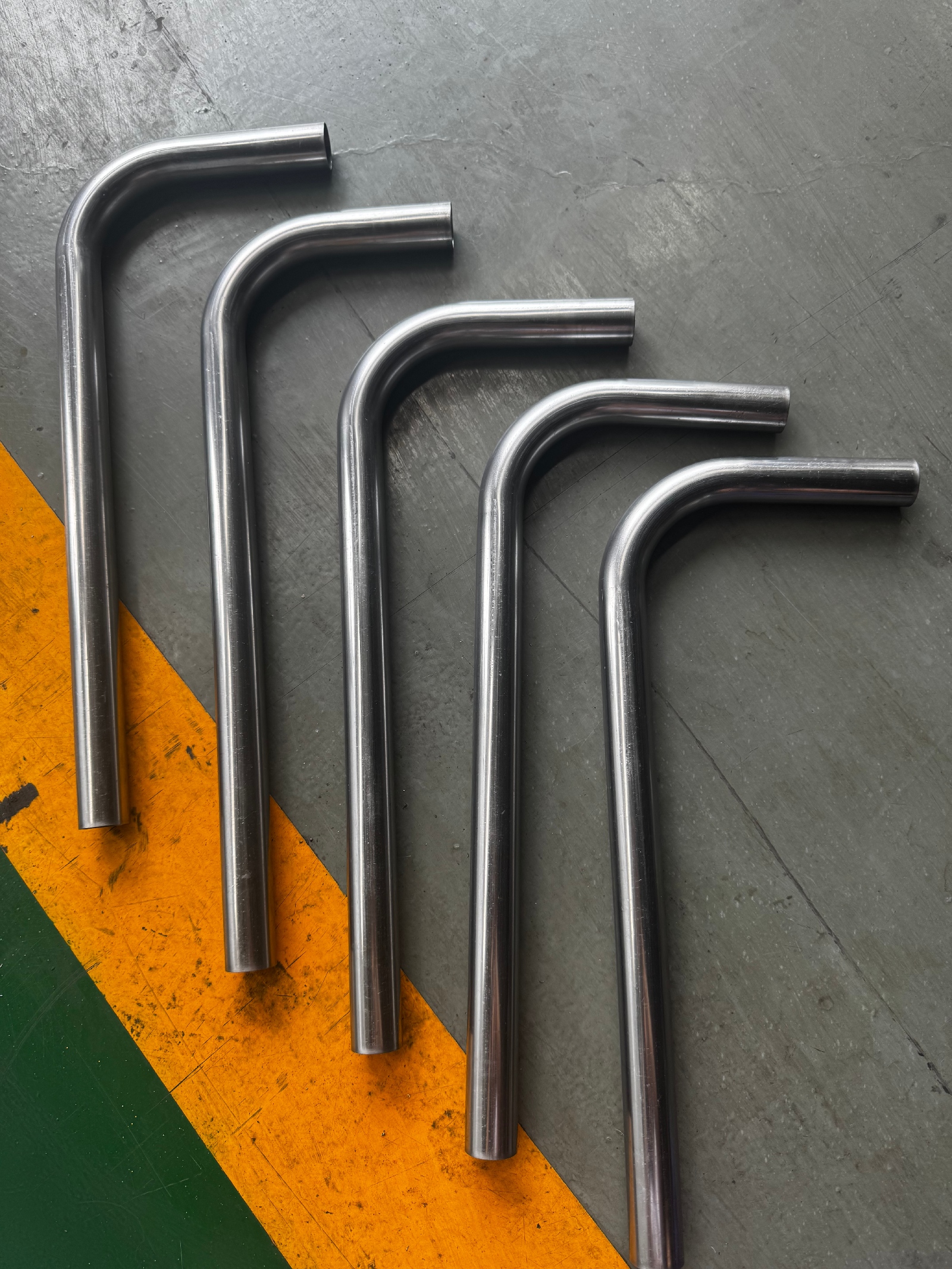
Why CNC Tube Bending Machines Improve Quality
Compared with manual or conventional hydraulic machines, CNC tube bending machines provide higher precision and repeatability.
Advanced servo control systems allow accurate coordination of feeding, rotation, and bending movements, helping manufacturers reduce wrinkles, minimize material waste, and improve production efficiency.
For high-volume production, CNC technology delivers more consistent bending quality while lowering operating costs.
Advanced servo control systems allow accurate coordination of feeding, rotation, and bending movements, helping manufacturers reduce wrinkles, minimize material waste, and improve production efficiency.
For high-volume production, CNC technology delivers more consistent bending quality while lowering operating costs.
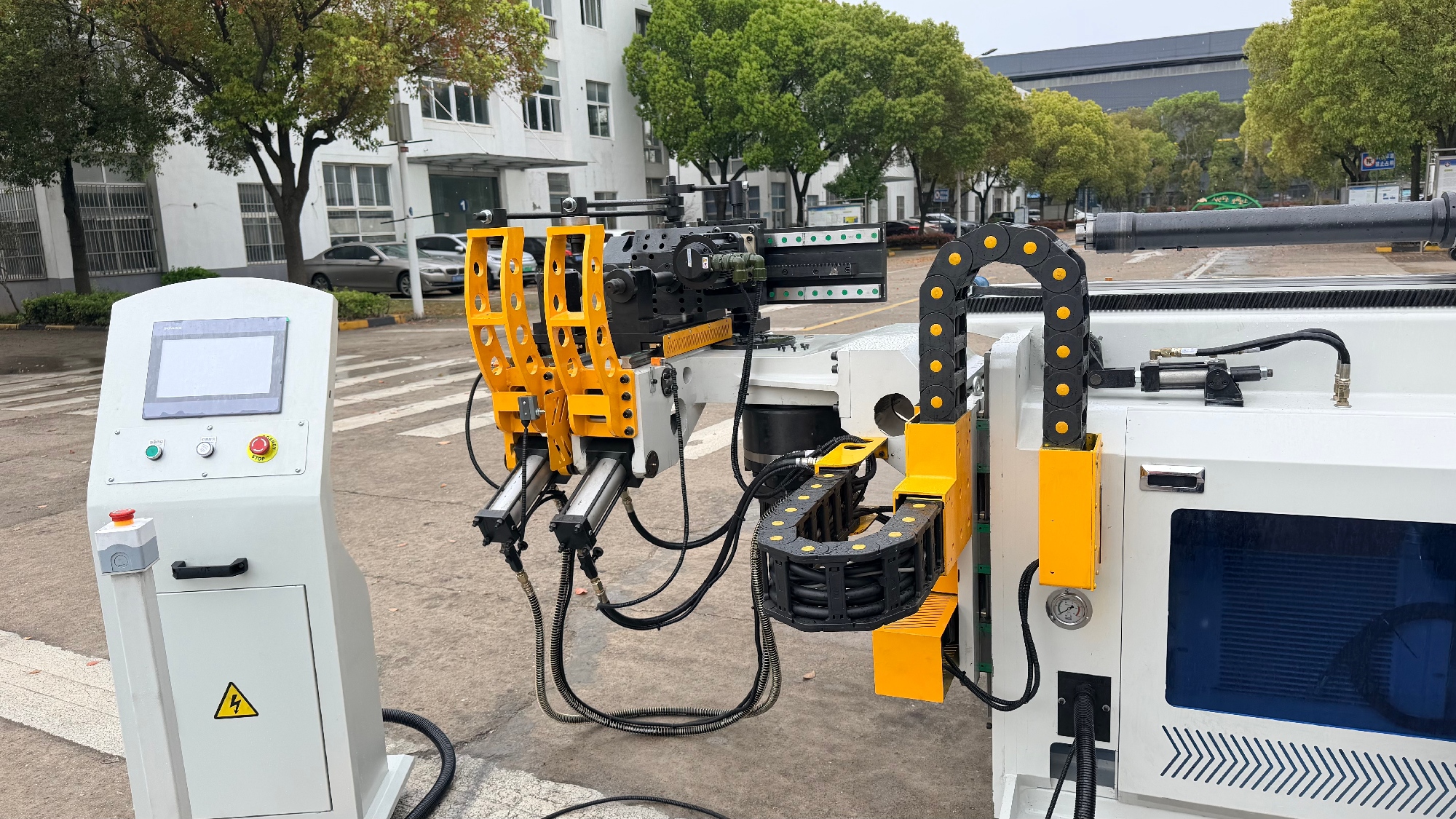
Choosing the Right Tube Bending Solution
Every application has unique bending requirements. Factors such as tube diameter, wall thickness, material type, bend radius, and production volume should all be considered when selecting a tube bending machine.
Whether manufacturing automotive exhaust systems, furniture frames, fitness equipment, HVAC components, or heat exchanger tubes, choosing the appropriate equipment and tooling is the key to achieving stable, high-quality bending results.
Conclusion
Tube wrinkling is a common but preventable bending defect. By understanding its causes and optimizing machine settings, tooling, and material selection, manufacturers can significantly improve product quality and production efficiency.
At Huashun Machinery, we provide CNC tube bending solutions designed to deliver high precision, stable performance, and reliable production for a wide range of tube processing applications.
At Huashun Machinery, we provide CNC tube bending solutions designed to deliver high precision, stable performance, and reliable production for a wide range of tube processing applications.
Tube Bending Springback: Causes and How to Control It
Stainless Steel, Copper, and Carbon Steel Tube Bending Challenges: Professional Tube Bending Solutions for Different Materials
Related Article

Discover how tube cutting, bending, rolling, and end forming machines help transform metal tubes into components used in furniture, vehicles, fitness equipment, HVAC systems, and industrial products.
How Tube Processing Technology Supports Modern Manufacturing
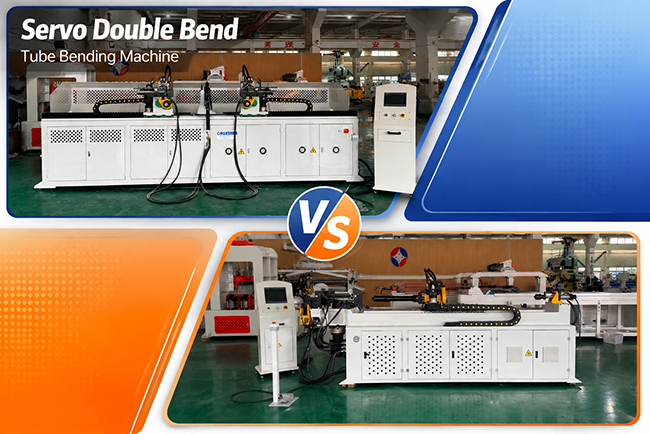
What Is the Difference Between a Double-Bend (Left-and-Right) Tube Bender and a Standard Tube Bending Machine?

