How to choose 5Axis 3Axis or 2Axis CNC Pipe Bending Machine

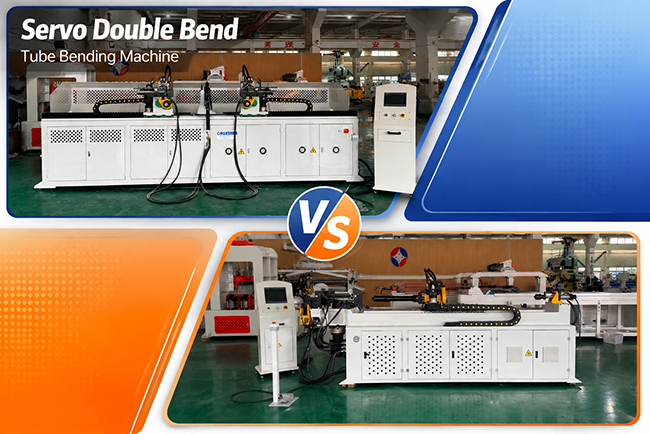
Currently on the market two-axis and three-axis automatic pipe bender is the mainstream models, they work in the principle and scope of application there are significant differences.
Two-axis automatic pipe bender, by virtue of the X-axis and Y-axis movement in the horizontal and vertical directions, can easily cope with all kinds of pipe bending needs, whether simple or complex shape of the pipe bending. But more suitable for relatively low quality requirements of pipe bending, in the angle and shape of the more basic cases, more cost-effective.
Three-axis automatic pipe bender, equipped with X-axis, Y-axis and Z-axis, to achieve a full range of movement in three-dimensional space. In the process of pipe bending, it can easily realize more complex angle, trajectory and position control, thus ensuring higher processing accuracy and pipe bending quality. But the price is higher than the two-axis automatic pipe bender, operation and maintenance costs are relatively high. Three-axis automatic pipe bender in the processing of complex pipe bending more advantageous, while the production efficiency is also more outstanding.
SB75CNC5A3ST Pipe Bending Machine | Huashun Machinery
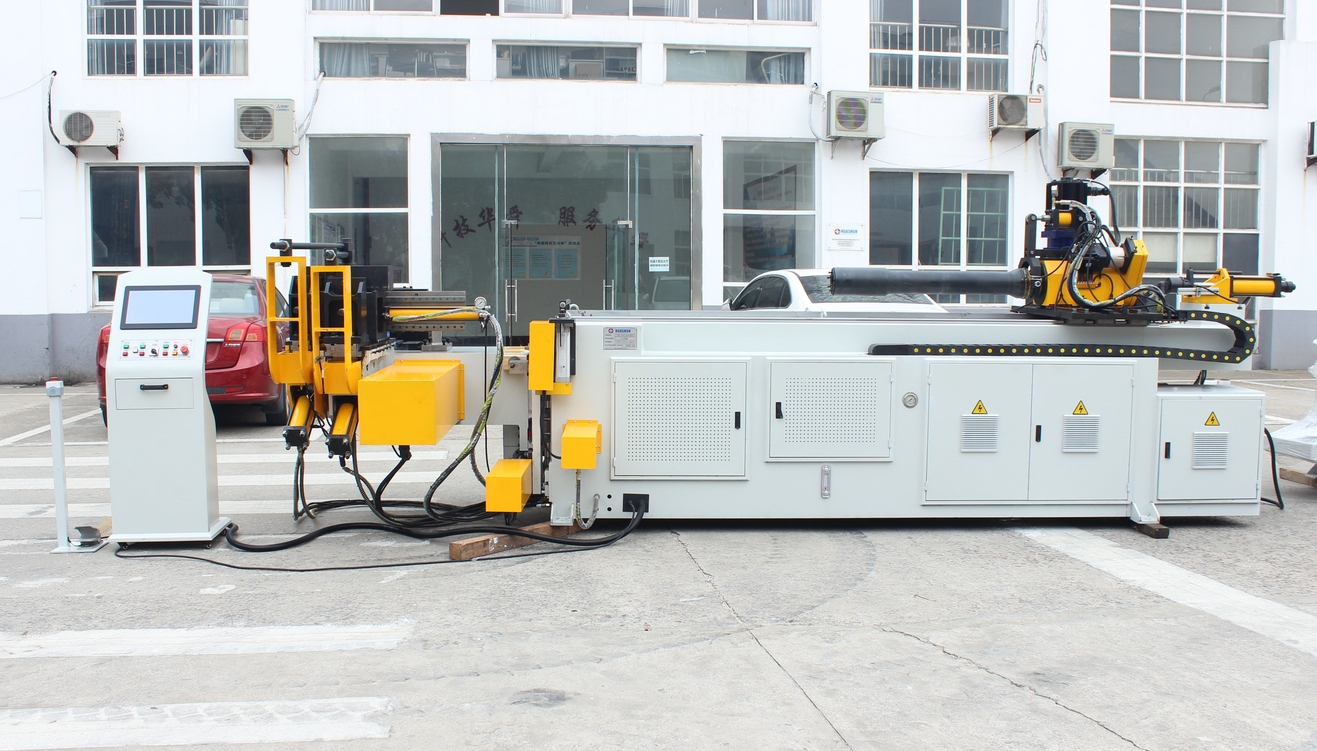
Five-axis automatic pipe bender, is based on the three-axis secondary rotary axis and three rotary axes, more intelligent and refined in the control mode, can achieve more complex bending processing.
SB75CNC5A3ST Pipe Bending Machine | Huashun Machinery
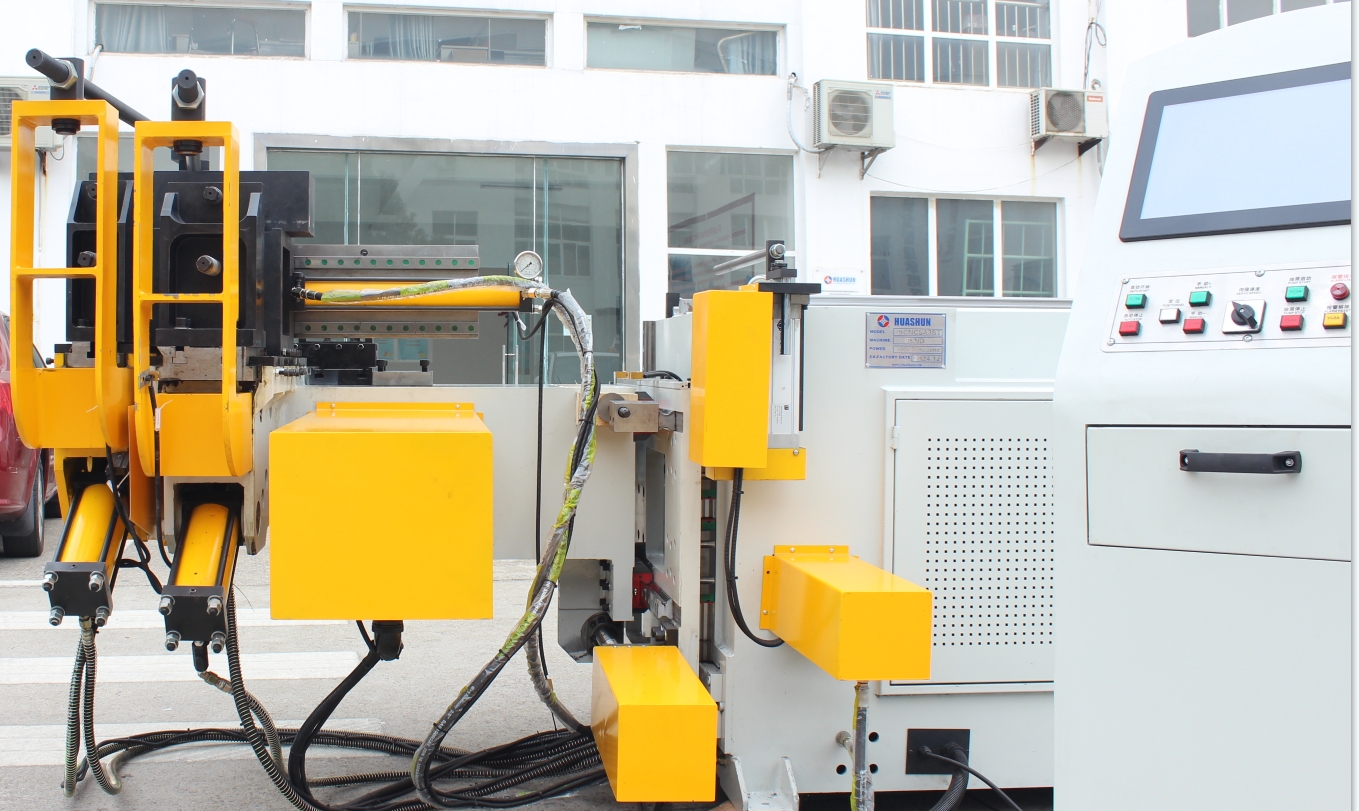
X-axis (linear feeding axis): controls the feeding of the pipe along the horizontal direction to ensure that the pipe can be fed into the working area of the pipe bender during the bending process.
Y-axis (vertical bending axis): controls the up and down movement of the bending mold or bending arm of the pipe bender to determine the bending angle of the pipe.
Z-axis (horizontal bending axis): controls the movement of the bending mold or bending arm in the horizontal direction, ensuring that the pipe is bent along different planes.
A-axis (rotary axis): controls the rotation of the tube around its own axis and is usually used to adjust the angle of the tube when it enters the bending zone.
B-axis (Angle Adjustment Axis): Controls the rotation of the bending mold or clamping device and adjusts the angle of entry of the tube.
5-axis, 3-axis, 2-axis, how to choose?
Two axis tube bending machines are usually suitable for simple bending operations, are relatively affordable and simple to operate.
Three-axis tube bending machines, on the other hand, are suitable for more complex and precise bending needs, and are able to handle a wider variety of tubes and more complex bending shapes. In the processing of round, flat, irregularly shaped bends, more suitable.
Five-axis pipe bender can be avoided in the process of bending pipe deformation due to axial force, so that the accuracy and quality of the bending of the pipe has been improved. Can be used to process more complex curved, S-shaped and V-shaped bends, etc., a wider range of applications.
Therefore, the choice of which pipe bender, depending on your specific need to bend the type of pipe, specifications and the complexity of the bend.
Multiple stacks layer CNC Tube Bender
Wire bending Machine Huashun Machinery
Related Article