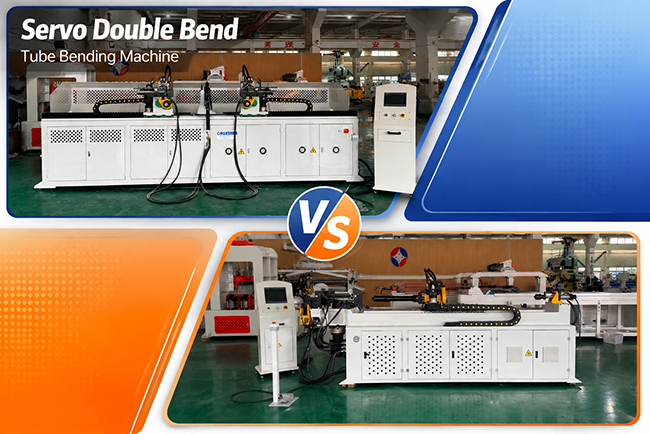
Rotary Draw Bending Function

Rotary Draw Bending is a high-precision tube bending process in which a die set surrounds the tube and pulls it into the bending mold to form the desired bend radius and angle. The process is effective in controlling wall thickness reduction and ovality of tubes, and is particularly suitable for small radius bending. It is widely used in the automotive, aerospace, construction and furniture industries.
Common equipment types
Modern rotary bending machines usually use CNC technology, which can accurately control the bending angle, radius and speed.
All-motor servo control bending machine: adopts zero oil pressure design, green and suitable for high-precision bending.
CNC rotary bending machine: equipped with multiple control axes (e.g., bending angle, clamping action, mandrel action, etc.), capable of realizing complex shapes of bending.
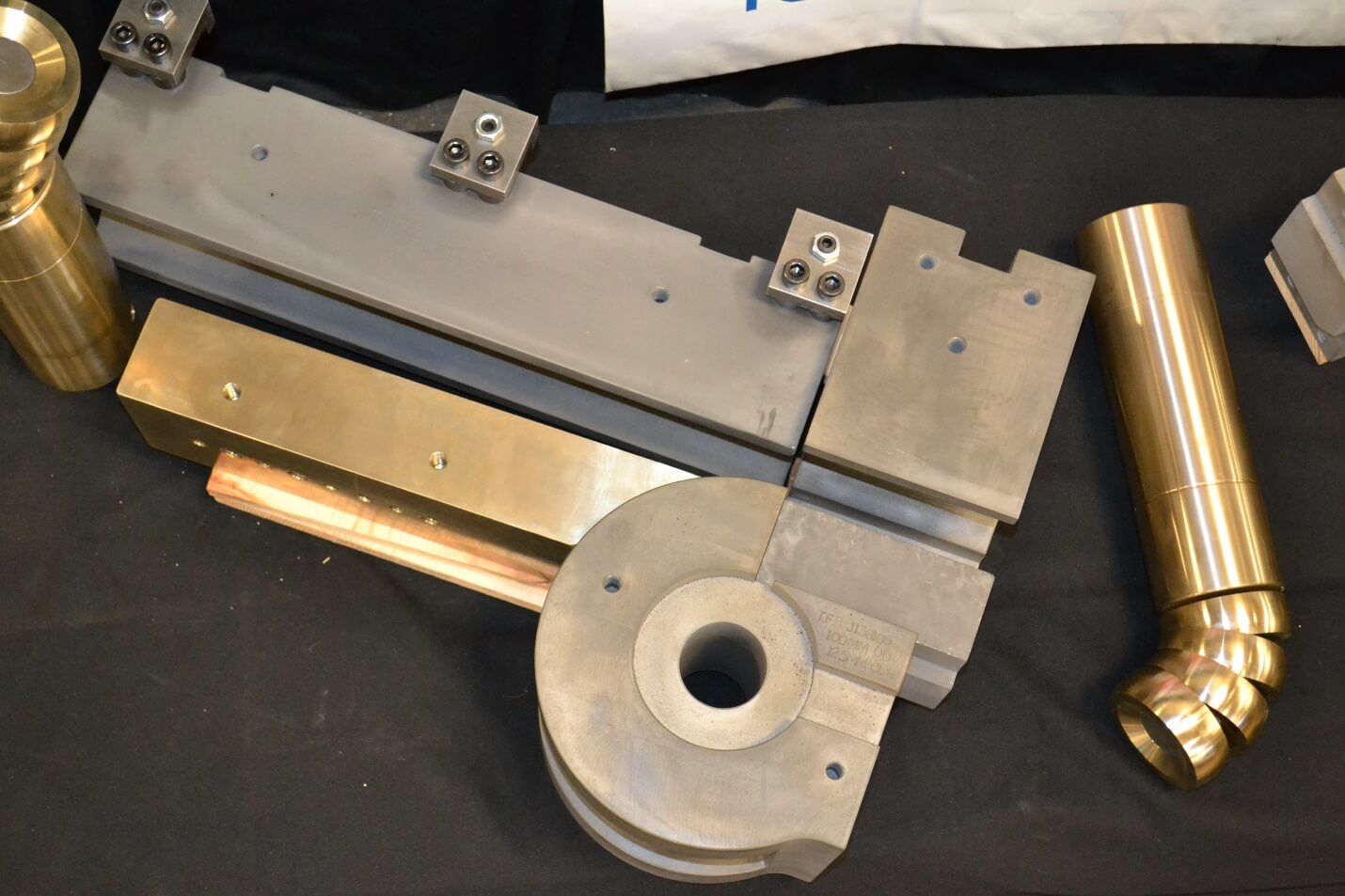
Mold Configuration
Rotary bending machines are usually equipped with pressure molds, clamping molds, mandrels and scraper molds. These molds can be changed and adjusted according to the shape and size of the pipe.
Bending process
Clamping the Pipe
The pipe or tube is securely clamped in place using a clamp die.This ensures that the pipe does not slip during the bending process.The pressure die supports the outer radius of the pipe to prevent wall thinning. Mandrels are inserted into the inner radius of the pipe to support the inside of the pipe and prevent wrinkles and deformation.
Rotational Bending Action
A bend die (forming die) with a preset radius rotates to draw the pipe around its contour.The pipe is supported by a pressure die, which holds it firmly in place. A wiper die may be used to prevent wrinkles, especially for thin-walled pipes.
Precise Angle Formation
The controlled rotation of the bend die ensures accurate bending angles. This method can create tight-radius bends with minimal wall thinning or ovality.
Springback Compensation
After bending, the pipe tends to slightly return to its original shape (springback). The machine compensates for this by slightly overbending to achieve the desired final angle.
Precautions
Material Selection: Tubes made of different materials exhibit different characteristics in bending, e.g. stainless steel has less rebound, while copper has less radial growth.
Mold Maintenance: Regularly check and maintain the mold to ensure that its surface is smooth and reduce scratches on the surface of the pipe.
Safe Operation: During operation, make sure the human body is far away from the rotating parts to avoid accidents.
Advantages of Rotary Draw Bending
High Precision: Suitable for applications requiring tight tolerances.
Minimal Deformation: Maintains roundness and wall thickness.
Repeatability: Ideal for mass production in industries like automotive, aerospace, and construction.
Diverse applications: suitable for a wide range of materials (e.g. stainless steel, aluminum, copper) and complex shapes of tubes.
Common Applications
Automotive roll cages.
Bicycle frames.
Handrails and guardrails.
Furniture manufacturing.
Hydraulic and pneumatic tubing.
Induction Bending Function
Roll Bending Function of the Pipe Bender
Related Article