Mandrels of pipe bender

Mandrel in the pipe bending process mainly play a role in supporting, protecting and preventing deformation of the pipe, especially in the case of small bending radius, thin-walled pipe, easy to deform the material, the bending angle is large, high precision requirements, to prevent deformation of the pipe in the process of bending, twisting or crumpling, to ensure that the final bending of the pipe quality and accuracy.
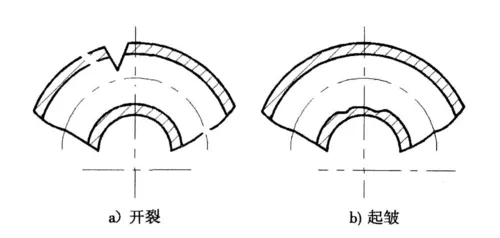
The need to use the mandrel bending situation:
1. Bending radius is small or large angle
2. Bending precision requirements
3. Long or large diameter pipe bending
4. Thin-walled pipe or easily deformed pipe
5. Brittle material or difficult to bend the pipe
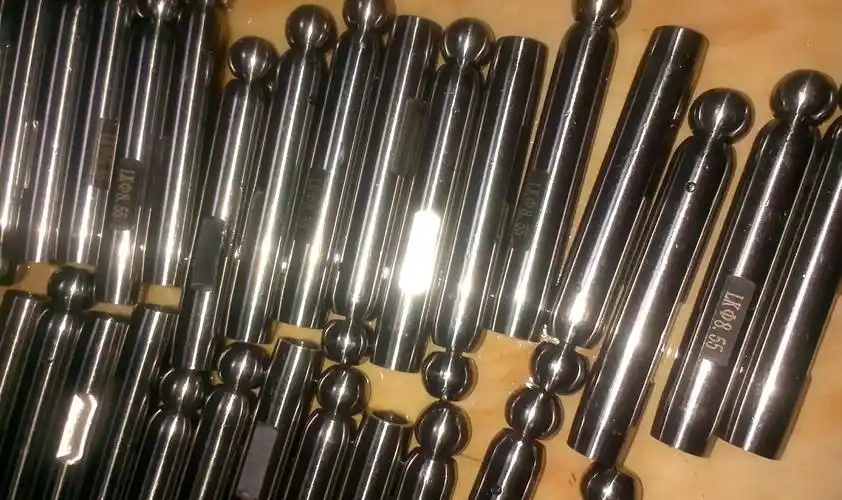
Types of mandrels
Mandrels are categorized into various types based on different tubing materials, bending requirements, bending radii and angles, operating temperatures and other factors. Common types of mandrels include fixed mandrels, adjustable mandrels, segmented mandrels, spring mandrels, integral mandrels, and others. Each type of mandrel is suitable for different tubes, production environments and processing needs. Choosing the right type of mandrel can ensure the quality and efficiency of the pipe bending process, to avoid deformation, wrinkles, cracks and other problems.
This type of mandrel is fixed with no adjustable parts and is usually manufactured to a standard size and shape. Its function is to support the inside of the pipe to keep the pipe round and prevent deformation when bending. It is generally used where the pipe size, shape, and bending angle are fixed, and is suitable for producing batch piping products. It is usually used for bending of large-diameter pipes and thick-walled pipes.
Adjustable mandrels can be adapted to the specifications of different tubes for greater flexibility. By adjusting the length, diameter or inner and outer shape of the mandrel, it can be adapted to different types of tubes. Suitable for different specifications of tubing, especially when there are more types of tubing in the production process, and the bending radius and angle change a lot.
Segmented mandrels consist of multiple removable sections that can be spliced together to form mandrels of different lengths and diameters as needed for a wide range of different pipe sizes. Suitable for production environments that require frequent adjustments of different pipe sizes and lengths, especially where different sizes of pipe need to be handled.
Spring-loaded mandrels are usually made of spring material and have a certain degree of elasticity that allows them to expand or deform during the bending process depending on the degree of bending of the pipe. This type of mandrel is more flexible and can adapt to some irregular bending. It is suitable for softer or thinner pipes, especially when the pipe is irregular or needs a larger bending angle, the spring mandrel can provide better support.
Integral mandrels are constructed as a single unit with no segmented or adjustable parts. It is typically used for tubes of fixed size to provide very stable support. Suitable for high volume production where the tube size and shape are uniform, and commonly used where frequent mandrel changes are not required during production.
These mandrels are manufactured using high temperature resistant materials and are capable of withstanding high operating temperatures. Commonly used in tubing that needs to be heated and bent at high temperatures, such as the bending of certain special metals (e.g., stainless steel, titanium alloys, etc.). Suitable for tubing that needs to be heated and bent or high-temperature working environments to ensure that tubing is not deformed or damaged when bent at high temperatures.
These mandrels are manufactured using high temperature resistant materials and are capable of withstanding high operating temperatures. Commonly used in tubing that needs to be heated and bent at high temperatures, such as the bending of certain special metals (e.g., stainless steel, titanium alloys, etc.). Suitable for tubing that needs to be heated and bent or high-temperature working environments to ensure that tubing is not deformed or damaged when bent at high temperatures.
8. Quick-change mandrels
These mandrels are designed for quick changeover, often with quick connect and disconnect features, and are suitable for use in production lines where different tubes are frequently changed. Ideal for applications where frequent tube size changes are required during production, especially in automated production lines or assembly lines.
Self-lubricating mandrels are equipped with an internal lubrication system that reduces friction with the pipe during the bending process, alleviating wear and prolonging the life of the mandrel. Suitable for high-intensity, high-frequency use of the occasion, especially need to reduce friction, improve production efficiency of the production environment.
Push bending capability of pipe bender
Tube End Closing Machine
Related Article