
Push bending capability of pipe bender
author: Huashun Machinery
2024-12-13

Push bending is a bending process in which the pipe is pushed by an applied axial force, causing it to deform plastically within the constraints of a mold. The pipe is fixed on the mold. A pusher (or roller) applies axial thrust to the pipe, and the pipe is gradually shaped in the direction of the bending radius of the mold. During the bending process, the shape and size of the bending mold determine the final bending angle and radius.
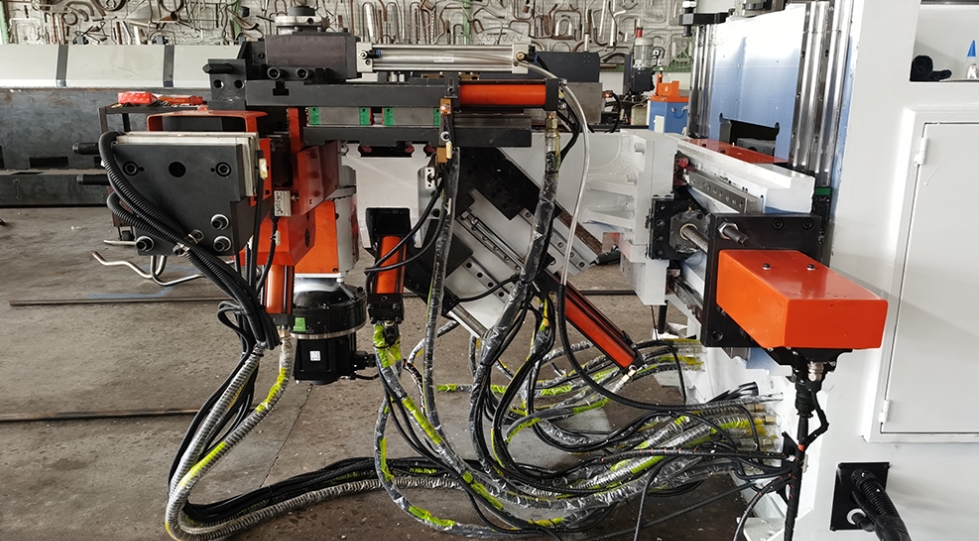
SB38CNC5A3S(LR)
Conditions of use of the push-bend function:
●Larger bending radius, usually suitable for long radius (more than 3 times the pipe diameter) or non-standard bending.
●Smaller wall thickness variation, suitable for workpieces with high wall thickness requirements.
●Larger bending radius, usually suitable for long radius (more than 3 times the pipe diameter) or non-standard bending.
●Smaller wall thickness variation, suitable for workpieces with high wall thickness requirements.
The main advantages of the push-bend function:
●High efficiency, suitable for continuous processing, especially when there is a need to bend multiple sections of pipe fittings of the same radius.
●Consistent quality, high consistency of the bent shape due to precise control of the mold.
●High material utilization, reducing scrap generation and lowering processing costs.
●Process flexibility, suitable for complex shapes or multi-section bending.
●High efficiency, suitable for continuous processing, especially when there is a need to bend multiple sections of pipe fittings of the same radius.
●Consistent quality, high consistency of the bent shape due to precise control of the mold.
●High material utilization, reducing scrap generation and lowering processing costs.
●Process flexibility, suitable for complex shapes or multi-section bending.
Key control points in the push-bending process:
●Mold design, mold bending radius and surface smoothness directly affect the quality of the finished product.
●Thrust control, too much thrust will lead to thinning or wrinkling of the wall, and insufficient thrust is prone to rebound.
●Lubrication treatment, add lubricant in the process, can reduce friction, protect the surface of the pipe.
●Material properties, to ensure that the toughness and tensile strength of the pipe meets the requirements, in order to avoid breakage during processing.
●Mold design, mold bending radius and surface smoothness directly affect the quality of the finished product.
●Thrust control, too much thrust will lead to thinning or wrinkling of the wall, and insufficient thrust is prone to rebound.
●Lubrication treatment, add lubricant in the process, can reduce friction, protect the surface of the pipe.
●Material properties, to ensure that the toughness and tensile strength of the pipe meets the requirements, in order to avoid breakage during processing.
Wire bending Machine Huashun Machinery
Mandrels of pipe bender
Related Article

Discover how tube cutting, bending, rolling, and end forming machines help transform metal tubes into components used in furniture, vehicles, fitness equipment, HVAC systems, and industrial products.
How Tube Processing Technology Supports Modern Manufacturing
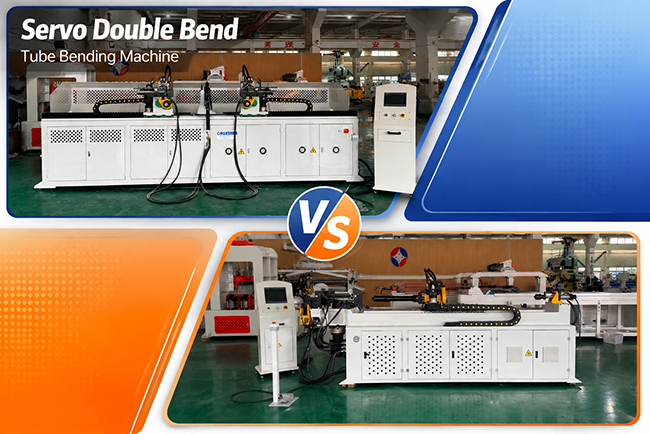
What Is the Difference Between a Double-Bend (Left-and-Right) Tube Bender and a Standard Tube Bending Machine?

