
How To Choose A Tube Chamfering Machine
author: Huashun Machinery
2025-07-11
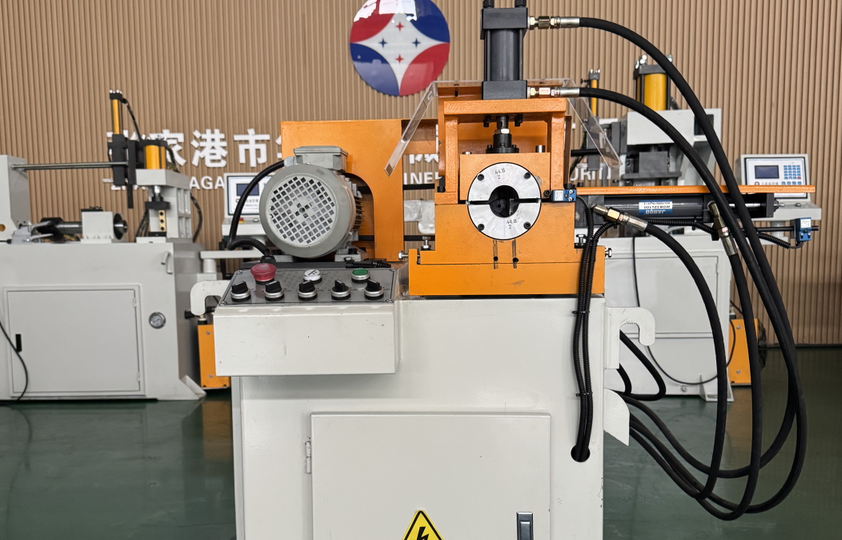
Metal Pipe Chamfering Machine
- The metal pipe chamfering machine is mainly used for chamfering, deburring, and edge-rounding of metal pipe ends, improving the assembly accuracy, safety, and appearance of pipe fittings. Its primary applications include:Oil and Gas Industry: Used for end processing of oil well pipes, oil transmission pipes, and casing pipes.
- Automotive Manufacturing: Processing fuel pipes, exhaust pipes, hydraulic pipes, etc.
- Aerospace: Precision chamfering of high-strength alloy pipes.
- Construction and Steel Structures: End-face treatment of scaffolding pipes, bridge pipes, etc.
- Mechanical Manufacturing: Chamfering of hydraulic cylinders, drive shaft pipes, and other components.
- Home Appliances and Furniture: Edge treatment of metal brackets and decorative pipes.
Types of Metal Pipe Chamfering Machines and Their Pros & Cons
- Manual Chamfering Machine
- Advantages: Low cost, simple operation, suitable for small batch or repair scenarios.
- Disadvantages: Low efficiency, inconsistent results, high labor intensity.
- Semi-Automatic Chamfering Machine
- Advantages: Combines automation with manual control, suitable for medium-volume production, higher precision.
- Disadvantages: Requires manual intervention, limited speed.
- Fully Automatic Chamfering Machine
- Advantages: High efficiency (can process continuously), stable precision, suitable for mass production (e.g., automotive industry).
- Disadvantages: High equipment cost, requires an auxiliary conveyor system.
- Portable Chamfering Machine
- Advantages: Strong flexibility, can be used for on-site work (e.g., large pipe installations).
- Disadvantages: Limited processing range, usually used for small-diameter pipes.
- CNC Chamfering Machine
- Advantages: Programmable control, supports complex chamfering angles (e.g., double-sided chamfer), suitable for high-precision requirements (e.g., aerospace).
- Disadvantages: Expensive, complex operation and maintenance.
- Specialized Chamfering Machine
- Advantages: Optimized for specific pipe materials (e.g., thin-walled pipes, stainless steel), excellent processing results.
- Disadvantages: Poor versatility, requires adjustment for product changes.
Key Considerations in Choosing a Metal Pipe Chamfering Machine
- Processing Requirements
- Pipe Parameters: Pipe diameter range, wall thickness, material hardness (e.g., stainless steel requires higher power).
- Chamfering Requirements: Angle (30°, 45°, etc.), surface finish, whether inside and outside chamfering is required.
- Production Efficiency
- Batch size determines whether a manual, semi-automatic, or fully automatic machine is needed.
- Continuous production requires consideration of automatic feeding/discharging functions.
- Precision and Stability
- High-precision industries (e.g., aerospace) require CNC or servo-controlled machines.
- Check the rigidity of the equipment, spindle runout, and other key parameters.
- Cost Budget
Balance between equipment price, maintenance costs, and long-term return on investment.
- Operation and Maintenance
Training difficulty, ease of tool replacement, and support for multi-tool configurations.
- Safety
Safety features (e.g., emergency stop buttons, debris shields), compliance with industry safety standards.
- Scalability
Whether the machine supports future upgrades (e.g., adding automation modules).
How To Choose A Pipe Roller Bending Machine
Tube End Forming Machine Process Flow
Related Article

Discover how tube cutting, bending, rolling, and end forming machines help transform metal tubes into components used in furniture, vehicles, fitness equipment, HVAC systems, and industrial products.
How Tube Processing Technology Supports Modern Manufacturing
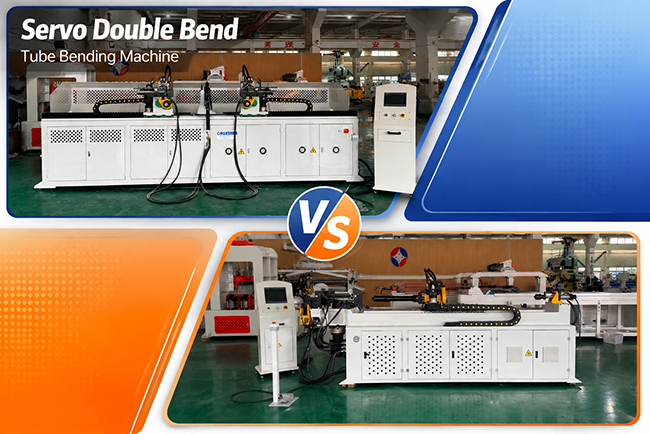
What Is the Difference Between a Double-Bend (Left-and-Right) Tube Bender and a Standard Tube Bending Machine?

