
Why can not replace bending lube with lubricant ?
author: Huashun
2024-10-10

Bending lube is also called bend drawing oil, a kind of bending and metal forming lubricant, which is the lubricating oil used in all kinds of draw bending processes.
Functions of bending lube:
- Improve Product Quality: Using the appropriate bending lube can enhance the appearance and performance of products, reducing surface scratches, cracks, or deformation.
- Increase Production Efficiency: It minimizes processing issues and downtime, thereby improving production efficiency.
- Enhance Metal Formability: bending lube reduces friction, improving the formability of metals, allowing them to be stretched into more complex and precise shapes.
- Reduce Friction: During the metal forming process, bending lube can decrease the friction between the metal and the mold, making processing easier.
- Prevent Metal Adhesion: It helps prevent metal from sticking to the mold surface during processing, reducing product defects and scrap rates.
- Lower Energy Consumption: By reducing friction, using bending lube lowers mechanical power consumption, thereby reducing energy costs.
- Extend Mold Life: Reducing friction and metal adhesion helps decrease mold wear, extending its lifespan.
- Adapt to Different Materials: Various formulations of bending lube can accommodate different metal materials, such as aluminum, steel, and copper.
- Eco-Friendly: Water-based bending lube have a minimal environmental impact and are easy to clean and recycle.
Difference between bending lube and ordinary lubricant:
- Composition difference:bending lube is usually made of mineral oil, synthetic oil or fatty acid esters and other base oils mixed with additives; lubricating oil is usually composed of base oil and additives.
- Functional difference:bending lube has a high viscosity and lubricating properties, can form a layer of protective film on the surface of the metal, reduce the direct contact between the metal, thereby reducing friction and wear. Tensioning oils also have good cooling properties, which can reduce the temperature during processing. The main function of the lubricant is to reduce the friction between various components in mechanical equipment, reduce wear and energy loss, and extend the service life of the equipment.
- Usage difference:bending lube is mainly used for cold working during metal processing, such as stretching, extrusion, stamping and so on. Lubricating oil can be used to lubricate the engine, gears, bearings, hydraulic systems and other components to reduce wear and failure of mechanical equipment, improve the reliability and efficiency of the equipment .
Risks of replacing bending lube with lubricant:
- Insufficient lubrication: The lubricant may not provide sufficient extreme pressure and anti-wear properties, which may result in scratches, burrs or other damage to the surface of the workpiece.
- Shortened mold life: lubricants may not provide sufficient lubrication film to protect the mold, mold wear accelerated, thus shortening the life of the mold.
- Reduced machining quality: The use of lubricants cannot effectively reduce friction during machining, which may affect the dimensional accuracy and surface finish of the machined part.
- Reduced productivity: The inability of a lubricant to effectively reduce friction and control temperature results in increased downtime during production to clean the mold or repair processing defects, thus reducing productivity.
- Safety Risks: If the lubricant does not provide adequate cooling, it can lead to high temperatures during metal processing, increasing the risk of fire or burns.
- Increased Costs: The use of a lubricant may appear to be less costly in the short term, but in the long term it may lead to more repairs, mold replacements, and scrap rates, increasing costs instead.
- Environmental pollution: If the lubricant does not have good biodegradability, it may pollute the environment, especially in the event of a spill or improper discharge.
- Failure to meet process requirements: Certain machining processes require the use of bending lube to meet product performance requirements, such as extreme pressure performance, rust resistance, etc. Ordinary lubricants are unable to fulfill these requirements.
Precautions for the use of pipe bending machine
What is Pipe Rolling Machine?
Related Article

Discover how tube cutting, bending, rolling, and end forming machines help transform metal tubes into components used in furniture, vehicles, fitness equipment, HVAC systems, and industrial products.
How Tube Processing Technology Supports Modern Manufacturing
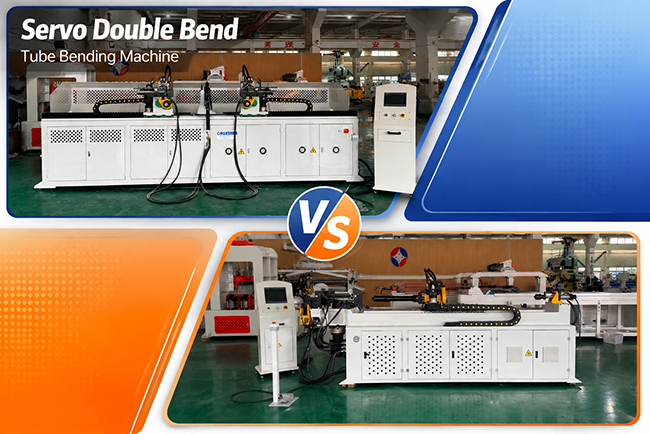
What Is the Difference Between a Double-Bend (Left-and-Right) Tube Bender and a Standard Tube Bending Machine?

