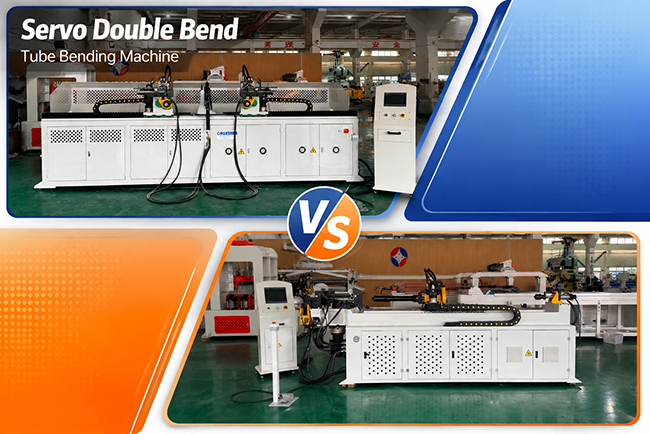
Multiple stations Tube-end Forming Machine

Multi-station metal pipe end forming machine is used to form and process metal pipe ends with high efficiency and usually consists of several forming stations, each of which performs a different forming task. Complex processing of metal pipe ends, such as expansion and reduction of the mouth, taper processing, convex shoulders, perforation of internal and external surfaces, chamfering, etc., can be realized by step-by-step forming. The machine is hydraulically, pneumatically or electrically driven and is capable of forming a wide range of metal materials, including stainless steel, aluminum, copper, alloy steel and more. Typical applications are in automotive manufacturing, aerospace, energy, chemical, and other industrial piping systems.
Multi-station metal pipe end forming machine features:
High precision, high articulation precision between each station ensures precise size and tolerance control of tube end molding.
Versatility, able to complete a variety of molding processes, such as flaring, shrinking, conical, spherical, plane punching and so on.
High productivity, due to multi-station setup, multiple operations can be completed on one machine, improving processing efficiency.
High degree of automation, usually equipped with PLC control system, easy to operate and high degree of automation.
Multi-station metal pipe end forming machine workflow:
Pipe clamping and positioning: The pipe is firstly fixed in the machine by means of clamps or positioning devices to ensure that the pipe ports are accurately aligned with the position of each station.
Forming operation: In different stations, the machine will complete different forming tasks in sequence: Expanding, expanding the pipe end to the specified size by mechanical or hydraulic pressure. Shrinking, which shrinks the pipe end to the required size. Taper forming, where the end of the pipe is shaped into a cone, often used for pipe connections. Spherical forming, forming pipe ends into spherical shapes, commonly used for pipe connections that require welding. Internal and external perforation, punching holes in pipe ends as required, often for quick venting or venting. Chamfering, providing a chamfer to the pipe end, typically used to reduce friction or stress concentrations when joining components.
Cooling and Inspection: After the molding is completed, it is usually cooled down and the quality of the molding is ensured by sensors or inspection systems to make sure there are no defects.
Unloading: After completing the molding operation at all stations, the pipe is unloaded for the next processing or treatment.
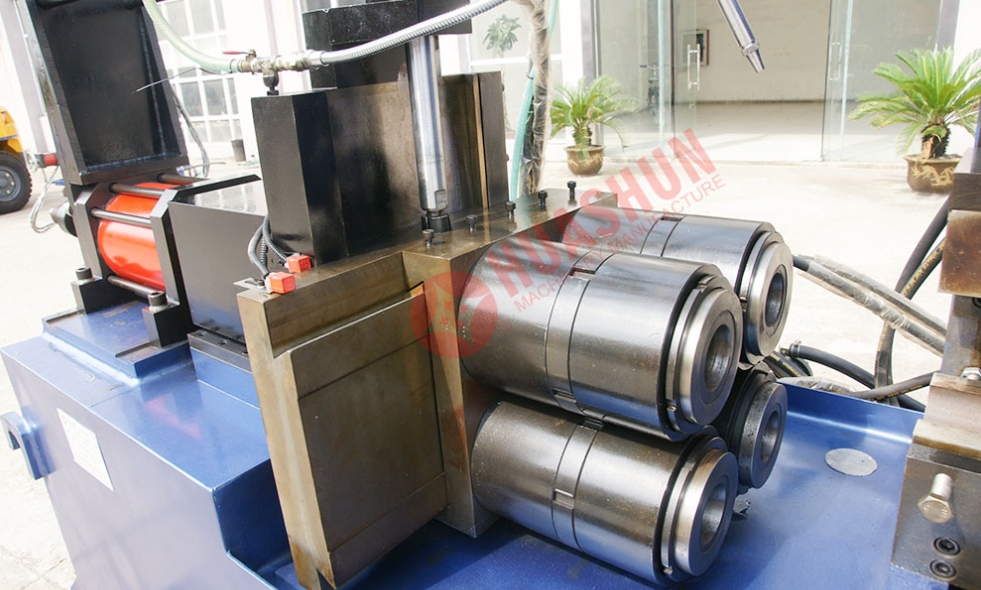
Main components of multi-station metal pipe end forming machine:
Drive system: Hydraulic drive, commonly used for high load, heavy duty molding, the hydraulic system provides a stable, powerful force, suitable for a variety of molding tasks. Pneumatic drive, suitable for smaller pressure requirements of the molding, providing faster working speed, commonly used in simpler molding process. Electrically driven, for jobs requiring higher precision, providing stable torque and speed, suitable for molding small diameter pipes.
Forming Stations: Multi-station metal pipe end forming machines are usually equipped with multiple forming stations, each of which performs a different forming process. Expansion station, through the mold and hydraulic pressure to expand the pipe end. Shrinking station, where the pipe end is shrunk to the target size by means of a mold and hydraulic pressure. Taper forming station, where the end of the pipe is formed into a taper by means of a special mold. Spherical forming station, where the pipe ends are shaped into spheres. Chamfering station, chamfering the pipe ends to reduce stress concentration.
Clamps and positioning devices: these are used to hold the pipe and ensure precise positioning of the pipe to avoid displacement during the forming process. Positioning device ensures precise alignment of the pipe with each station.
Hydraulic system: Hydraulic pumps and cylinders are used to provide efficient molding force to ensure that the pipe can smoothly complete the operations of flaring and shrinking. The hydraulic system can precisely control the size and direction of the force to ensure the precision of molding.
Electric control system (PLC control): PLC control system is used to control the running process of the whole machine, including the action of each station, operation sequence, working speed, etc.. Through the touch screen or buttons, the operator can easily set the parameters for the adjustment and control of the equipment.
Cooling and Inspection System: Cooling system to ensure that the pipe will not be deformed due to overheating during the molding process and to extend the life of the mold. Inspection system, including size inspection, surface inspection and other functions, to ensure that the quality of pipe molding meets the requirements.
Multi-station metal pipe end forming machine application areas:
Automotive industry, for molding and processing of metal pipes such as automotive exhaust systems and cooling pipes.
Aerospace, used for molding of aircraft piping systems, requiring high precision and reliability.
Chemical industry, used for molding chemical pipes to ensure the sealing and pressure resistance of the pipes.
Energy & Oil, for pipe end machining of oil and gas pipelines to ensure the reliability of pipeline connections.
HVAC, for molding and processing of metal pipes in HVAC systems.
Caterpillar Tube Bender Mandrel
Multiple stacks layer CNC Tube Bender
Related Article