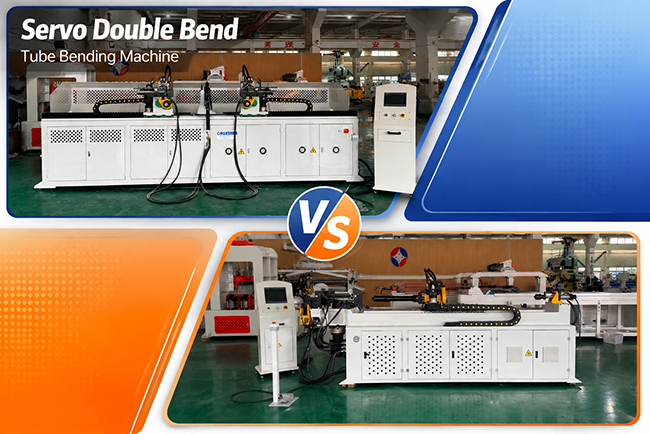
Home-made Manual Pipe Bender

Material Preparation
1. Steel: Angle, square or round pipe used to make the frame and bending arm.
2. bending mold: according to the diameter and angle of the required bending pipe to make or buy the appropriate mold.
3. clamping device: clamping blocks and bolts used to fix the pipe.
4. handles: handles or levers for manual operation.
5. bearings: to support the rotation of the bending arm. 6. bolts and nuts: to support the rotation of the bending arm.
6. bolts and nuts: used to fix the components.
7. Welding equipment: welding machine, welding rod, etc.
8. Tools: angle grinder, electric drill, wrench, measuring tools, etc.
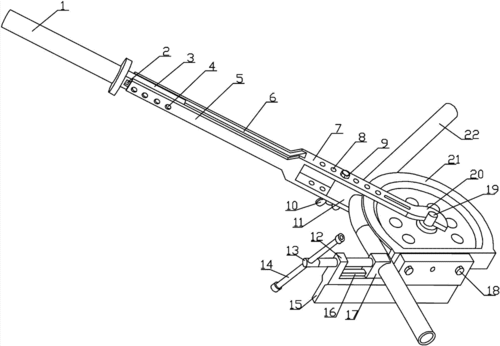
Begin production:
1. Design and planning
Determine the dimensions of the bender: according to the diameter and length of the required bending pipe, design the dimensions of the frame and bending arm.
Sketching: Sketch the structure of the bender, mark the position and size of each component.
2. Make the frame
Cutting steel: according to the design size, use the angle grinder to cut angle steel or square pipe to make the base and column of the rack.
Welding frame: Weld the cut steel into a stable frame structure, make sure the base and column are vertical and solid.
3. Make the pipe bending arm
Cutting bending arm: according to the design size, cut round or square pipe as bending arm.
Installation of bearings: Install the bearings on one end of the bending arm to ensure that the bending arm can rotate smoothly.
Welding the bending arm: Weld the bending arm to the column of the frame to ensure that the bending arm can rotate around the column.
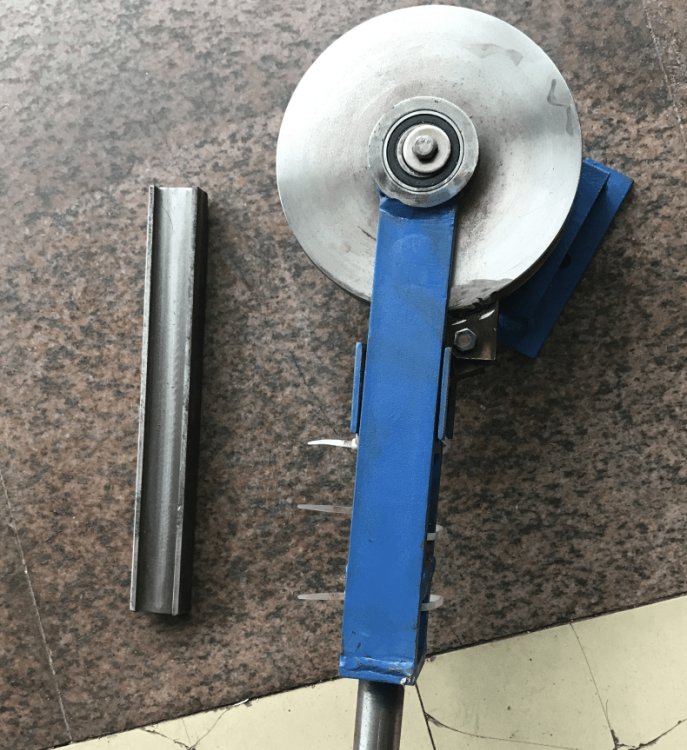
Make or buy a mold: according to the diameter and angle of the required bend, make or buy a suitable bending mold.
Fixing the mold: Fix the bending mold on the end of the bending arm, make sure the mold is firmly connected to the bending arm.
5. Production of clamping devices
Make clamping blocks: according to the diameter of the pipe, make two clamping blocks for fixing the pipe.
Installation of the clamping block: install the clamping block on the base of the frame, using bolts and nuts to ensure that the clamping block can firmly clamp the pipe.
6. Installation of Handle
Make the handle: Use round steel or square steel to make the handle, the length is moderate, easy to operate.
Fixed handle: Weld the handle to the other end of the bending arm to ensure that the handle can operate the bending arm smoothly.
7. Commissioning and testing
Inspection of components: Check whether the frame, bending arm, mold, clamping device and handle are firmly connected to ensure that the components can operate smoothly.
Test bending: use a piece of pipe for bending test, check the bending angle and effect, adjust the mold and clamping device to ensure the bending accuracy.
8. Surface treatment
Grinding and cleaning: Use angle grinder to grind the welded parts and clean the welding slag and burrs.
Paint to prevent rust: Apply antirust paint on the surface of the frame and the bending arm to prevent rust.
Precautions
Safety first: Wear protective equipment such as gloves and goggles when operating.
Welding quality: make sure the welding parts are firm, avoid false welding and leakage welding.
Debugging accuracy: repeatedly debugging the bending mold and clamping device to ensure bending accuracy.
Tube End Forming Machine Structural Overview
Induction Bending Function
Related Article