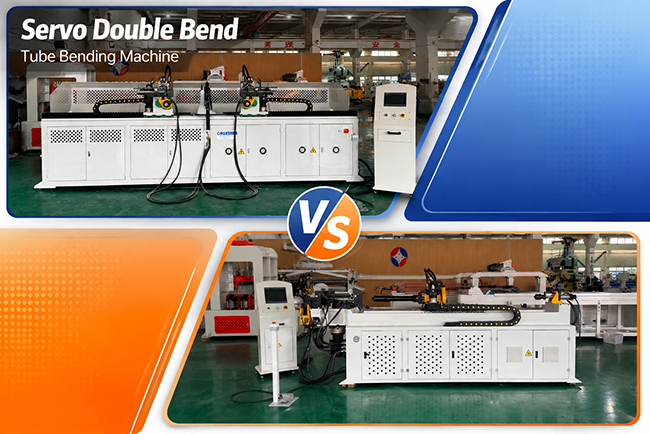
Tube End Forming Machine Structural Overview
I. Core Structural Components
1. Machine Frame and Base
The frame supports the entire machine, ensuring structural stability and rigidity. It is typically constructed from high-strength cast iron or welded steel, with integrated vibration-dampening features to minimize machining vibrations and enhance precision.
2. Power System
Hydraulic Drive (Common in heavy-duty machines):
A hydraulic power unit (motor + oil pump) delivers high-pressure hydraulic fluid. Hydraulic cylinders perform push-pull actions with adjustable pressure control, ideal for high-tonnage forming operations.
Servo Electric Drive (For high-precision applications):
Comprising a servo motor and ball screw assembly, this system offers superior positional accuracy (±0.01 mm), making it suitable for precision tube forming.
3. Clamping System
Secures the tube during processing to prevent displacement:
Clamping Dies: Segmental or integral dies matched to the tube’s outer diameter.
Clamping Force Control: Achieved through hydraulic or pneumatic actuation with adjustable pressure to avoid tube deformation.
4. Forming Dies
These dies directly contact the tube end and perform plastic deformation:
Flaring Die: A conical mandrel expands the tube end outward.
Reducing Die: Compresses the tube end to a specified smaller diameter.
Beading/Flanging Die: Rolls the tube end outward or inward.
Material: High-grade tool steel (e.g., SKD11) or carbide, with chrome-plated surfaces for increased wear resistance.
5. Feeding and Positioning System
Feeding Mechanism: Manual feed for compact machines or automated systems (robotic arm/servo feeder) for production lines.
Length Sensors: Ensure precise feed-in distance.
Adjustable Positioning Stops: Set tube insertion depth for repeatability and accuracy.
6. Control System
PLC with HMI Touchscreen: Allows pre-setting of process parameters such as pressure, speed, and stroke.
Pressure Sensors: Monitor forming force in real time with over-limit alarms.
Safety Interlocks: Prevent machine operation when safety doors are open.
II. Auxiliary Systems
1. Lubrication & Cooling
Lubrication Pump: Applies oil to die and tube interfaces to reduce friction and wear.
Cooling Channels (for hydraulic systems): Prevent overheating of hydraulic oil.
2. Scrap Collection
Chip Collection Tray: Captures waste material generated during end-facing or chamfering processes.
3. Safety Protection
Safety Guards
Emergency Stop Buttons
Light Curtain Sensors: Prevent hand injuries by halting operation when intrusion is detected.
Types of Tube End Forming Machine
Home-made Manual Pipe Bender